Nose correction with fillers –
everything you need to know about subtle nose refinement
Many people are not entirely satisfied with the shape of their nose but do not want to undergo surgery. Small irregularities, a slight bump, or an uneven transition in profile can be particularly noticeable. A rhinoplasty with fillers offers a safe, temporary, and subtle way to improve the shape of the nose. In this blog, you will read what the treatment does and does not do, how the technique works, and what to look out for when making a choice.
Table of contents
- What is a nose correction with fillers?
- How does it work?
- Who is this treatment suitable for?
- Results and expected impact
- Recovery and aftercare
- Costs and considerations
- Myths and facts
- Practical tips
- Examples and situations
- Conclusion
- Frequently Asked Questions
- Facts and sources
- Call-to-Action
What is a nose correction with fillers?
A nose correction with fillers, also known as a non-surgical rhinoplasty, is a treatment in which hyaluronic acid is used to make subtle adjustments to the shape of the nose. This allows minor irregularities to be softened and the profile to appear smoother. The goal is not enlargement or drastic change, but a more harmonious whole of forehead, nose, and lips.
How does it work?
During the treatment, the doctor places small amounts of filler at specific points in the nose.
Commonly used techniques are:
The filler is precisely modeled so that the shape remains natural. Most people see the effect immediately.

Who is the treatment suitable for?
This treatment is particularly suitable for people who:
Not suitable for:
A consultation always determines whether this method is desirable and safe.
Results and expected impact
The nose appears calmer and more symmetrical.
What you can expect:
The longevity varies per person, depending on skin quality, lifestyle, and type of filler.
Recovery and aftercare
The recovery is usually short. Advice includes:
Most people can resume their daily activities immediately.
Costs and considerations
The costs vary depending on the quantity and type of filler. Important considerations:
Realistic expectations are essential; a consultation helps with this.
Myths and facts
| Myth | Fact |
|---|---|
| Fillers can replace any nose surgery. | Fillers are suitable for subtle shape corrections, not for structural changes. |
| A filler nose correction is always painless. | Fact: Most people feel only slight pressure, but sensitivity varies from person to person. |
| The nose becomes visibly larger due to fillers. | Strategic placement can visually refine the nose. |
Practical tips
Examples and situations
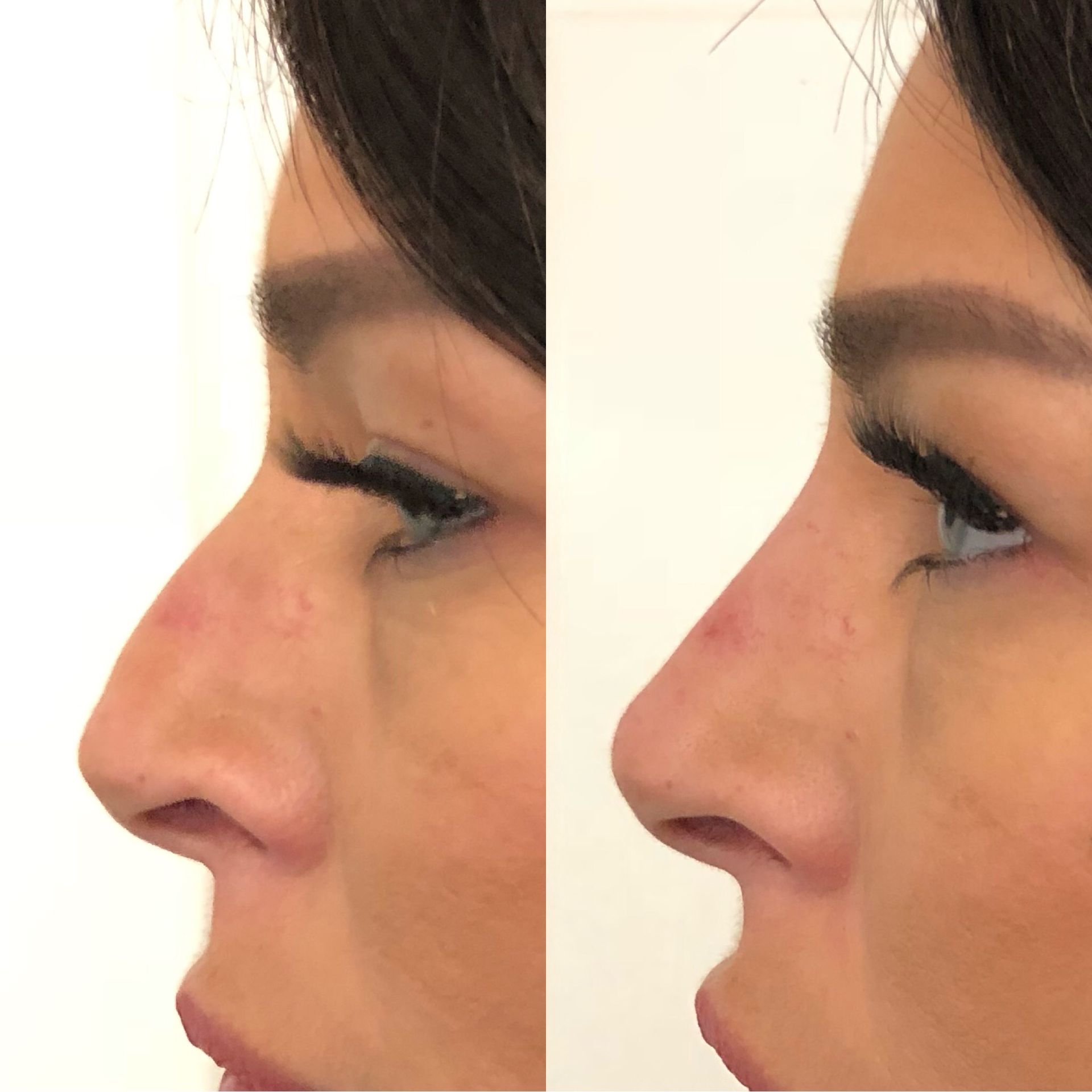
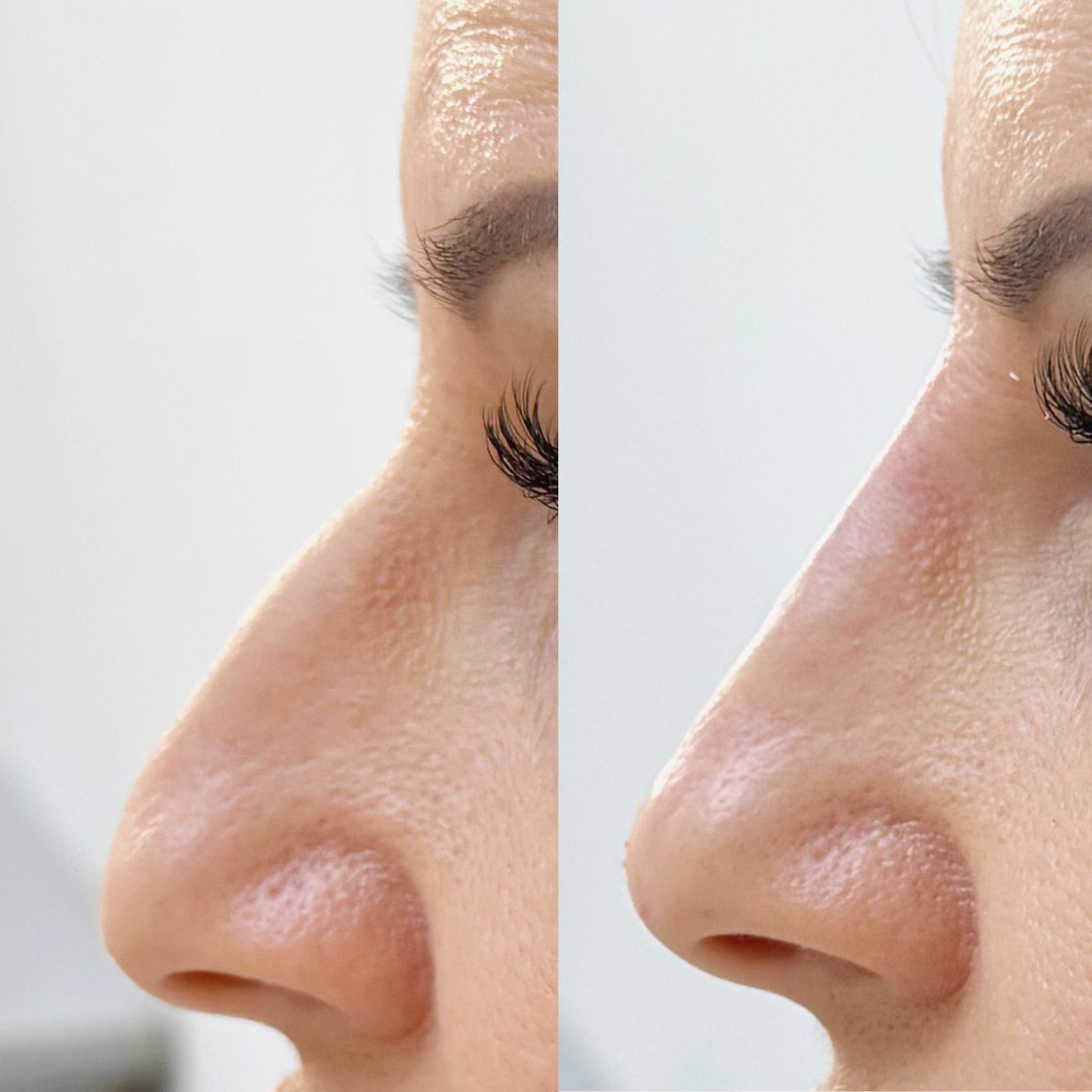
Case 1: A slight bump on the bridge of the nose. By placing small amounts of filler above and below the bump, a smoother line is created.
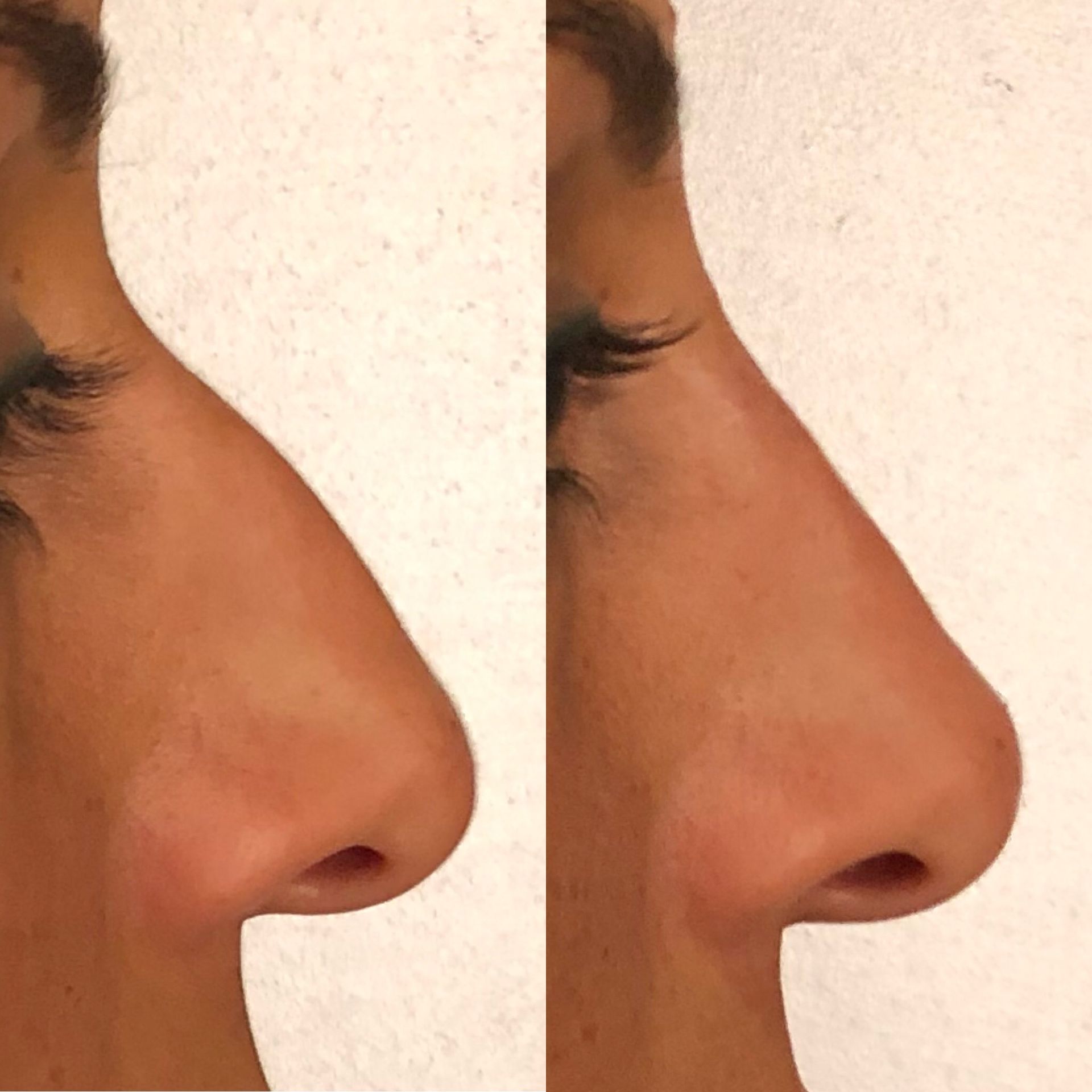
Case 2: A nose tip that visually points slightly downwards. With subtle support, the tip can be lifted slightly, making the profile appear softer.
Case 3: An irregular transition from forehead to nose. Making the nasal bridge more even creates more balance in the face.
Conclusion
A nose correction with fillers is a gentle and subtle way to soften minor imperfections without surgery. The treatment is temporary, reversible, and offers immediately visible results. It remains important to have realistic expectations and to choose an experienced doctor who works with safe and high-quality products.
Frequently Asked Questions
Does a nose correction with fillers hurt?
Usually mild. Anesthesia is administered if desired.
How long does the result last?
Average 9–18 months.
Is the filler dissolvable?
Yes, hyaluronic acid fillers can be dissolved.
Can I wear glasses right away?
Preferably avoid in the first few days to prevent pressure.
Is this suitable for a deviated septum?
No, functional complaints are not treated with this.
Source attribution
| Claim | Source | Result |
|---|---|---|
| Hyaluronic acid fillers are reversible | FDA | Confirmed |
| Swelling and tenderness are common | ASDS | Confirmed |
| Fillers correct form, not function. | NVPC | Depending on the situation |
| Average duration 9–18 months | Scientific literature | nuanced |
Eyelid correction Amsterdam
Are you considering a subtle nose correction with fillers, but want to be sure if it is right for you? During a no-obligation consultation, the doctor will calmly discuss the possibilities and what you can expect.