Reducing acne scars with microneedling: what works and what does not
An acne scar is often more stubborn than the spots that caused it. While redness and inflammation usually disappear on their own after a while, pits and uneven texture can remain visible for years. Microneedling is increasingly being mentioned as a solution, including at Cosmopolitan Clinic with the SkinPen. But what does the research actually show, and which types of scars does it work well—or less well—for?
Table of contents
- What are acne scars?
- How does microneedling work on scars?
- What does the research say?
- Which type of scar responds best?
- Treatment at Cosmopolitan Clinic
- Who is microneedling suitable for?
- What results can you expect?
- Aftercare and recovery
- Combining treatments
- Frequently asked questions
- Sources
What are acne scars?
Acne scars develop when an inflamed spot causes deeper damage in the skin than the body can repair on its own. Dermatologists generally distinguish between three types: ice-pick scars (narrow, deep pits), boxcar scars (wider depressions with straight edges) and rolling scars (wavy unevenness caused by attachments beneath the skin). This distinction is not merely theoretical: it largely determines how well a treatment such as microneedling works, as explained below.

How does microneedling work on scars?
During microneedling, a device with fine needles, such as the SkinPen, creates hundreds of tiny micro-injuries in the skin. This may sound counterintuitive for a scar treatment, but that small healing process is precisely the aim. The skin responds to these micro-injuries by producing new collagen and elastin, similar to the way a superficial graze heals with fresh skin. As the collagen builds up, pits may appear less deep and the skin texture becomes more even.
What does the research say?
A study published in the Journal of Clinical and Aesthetic Dermatology followed participants who received four microneedling sessions, each four weeks apart. Three months after the final treatment, there was an average improvement of 0.91 points on the Goodman and Baron scar scale, and approximately 85% of participants experienced a noticeable improvement. Side effects were mild: pain scores decreased within three days, redness largely subsided within five days, and a small number of participants developed temporary pigmentation changes that resolved on their own.
It is important to be honest: not everyone is equally enthusiastic. The Dutch Association for Dermatology and Venereology (NVDV) describes the results for acne scars as "moderately positive" and points out that the scientific evidence is still relatively limited. So do not expect a miracle cure, but do expect a treatment that can make a real difference for some people.
Which type of scar responds best?
The same JCAD study found a clear difference between scar types. Rolling scars showed the greatest improvement (1.06 points on the scar scale), while ice-pick scars proved much more difficult to soften (0.68 points). This makes sense: rolling scars are caused by underlying bands of connective tissue, and this is precisely where the collagen production stimulated by microneedling can help. With deep, narrow ice-pick scars, the pit is often too sharply defined to soften with needling alone. During a consultation, the doctor will assess which type of scar you have and whether microneedling is the right choice, or whether combining it with another treatment would be more appropriate.
Treatment at Cosmopolitan Clinic
Cosmopolitan Clinic uses the SkinPen for microneedling treatments. The doctor first determines which type of scar is involved and adjusts the needle depth and treatment plan accordingly. As in the studies above, treatment usually consists of several sessions, spaced a few weeks apart to allow the skin to recover and build collagen. The exact price and number of sessions required depend on the severity and type of scar. This will be discussed during a personal, no-obligation consultation.

Who is microneedling suitable for?
Microneedling is suitable for people with rolling or boxcar scars, no active acne, and generally healthy skin without active infections. The treatment is less suitable during pregnancy, in the presence of active skin inflammation, or for people prone to excessive scar formation (keloids). Microneedling is also often not the first choice for deep ice-pick scars; combining it with another technique may work better. The final assessment is always made during the consultation.
What results can you expect?
With microneedling, patience is not an afterthought but part of how the treatment works. The collagen produced by the skin after each session takes time to build up, so do not expect an immediately visible result after a single treatment. In the study cited, the final result was measured only three months after the fourth and final session. Allow several months before you see the full effect, with gradual improvement after each session.
Aftercare and recovery
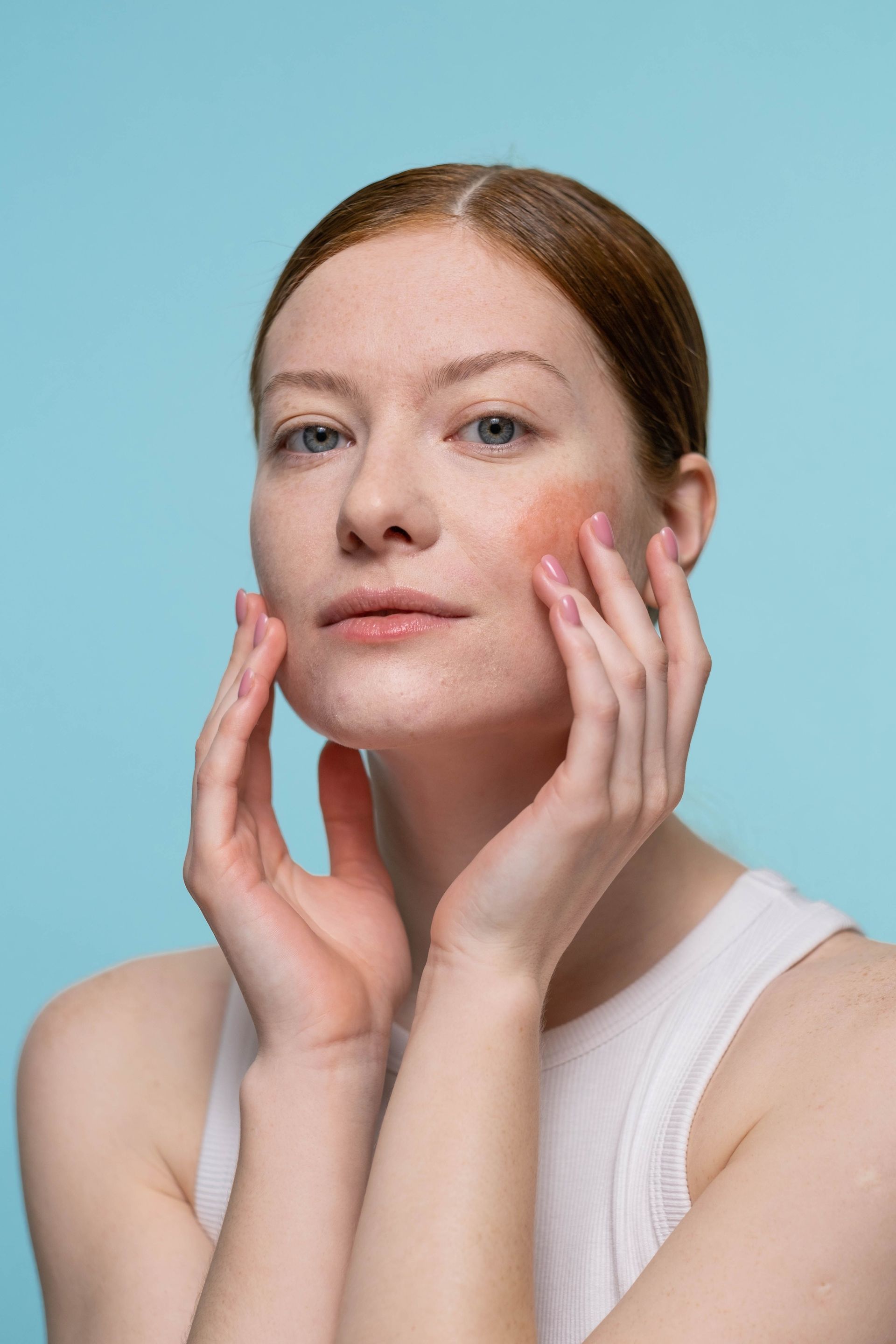
Immediately after treatment, the skin will be red and slightly sensitive, similar to mild sunburn. This usually subsides within a few days. For the first few days after treatment, avoid heavy makeup, intensive exercise and direct sunlight, and use gentle, non-irritating skincare products. Sun protection is particularly important in the following weeks because the skin is temporarily more sensitive to pigmentation changes.
Combining treatments
At Cosmopolitan Clinic, microneedling is sometimes combined with other treatments to support recovery. LED light therapy with Dermalux (/dermalux) is used, for example, to calm redness and speed up the healing process. Which combination is most appropriate depends on your skin type and the appearance of your scars, and will be discussed during your consultation.
Sources
| Subject | Sources |
|---|---|
| Microneedling improves acne scars by an average of 0.91 points on the Goodman and Baron scale, and 85% of participants saw an improvement. | Journal of Clinical and Aesthetic Dermatology (confirmed). |
| Rolling scars respond better to microneedling than ice-pick scars. | Journal of Clinical and Aesthetic Dermatology (confirmed). |
| Results for acne scars are "moderately positive", but the scientific evidence is still limited. | NVDV, Dutch Association for Dermatology and Venereology (confirmed, with a critical note). |
| Research supports microneedling as a standalone treatment, but more comparative research is needed. | Dermatology Times (confirmed). |
Frequently asked questions
Does microneedling work for all types of acne scars?
No. Rolling scars generally respond best, while deep ice-pick scars are less likely to soften with microneedling alone.
How many treatments are needed?
Research generally used four sessions spaced several weeks apart. The exact number depends on the appearance of the scars and is determined during the consultation.
When will I see results?
Improvement builds gradually. In research, the final result was measured only three months after the last session.
Is microneedling painful?
The treatment may feel sensitive, but research shows that pain scores decrease quickly after treatment. Numbing is available for extra comfort.
Is microneedling suitable for every skin type?
Yes, skin boosters are regularly combined with treatments such as microneedling or injectables, depending on the needs of the skin.
Personalised advice
Not sure whether microneedling is suitable for your type of scar? During a no-obligation consultation at Cosmopolitan Clinic (/skinpen-microneedling), the doctor will assess your skin and give you honest advice on whether microneedling, or a combination of treatments, is most likely to deliver the best result. Make an appointment here (/contact).