Sleeping on your side after fillers: when can you resume?
You have just had your treatment, it is eleven o’clock at night and you are standing beside your bed with one question: can I simply sleep on my side tonight? Online, you find six hours, the first night, or forty-eight hours. Three answers, three clinics, no explanation.
That confusion is unnecessary. How long you need to sleep on your back does not depend on which website you happen to open, but on what was injected, where it was placed and how deep it was placed. Below, you can read what really matters for each treatment area, what happens if you wake up on your side anyway, and why biostimulators are a completely different story from a standard hyaluronic acid filler.
Table of contents
- Why your sleeping position matters during the first few nights
- How long should you sleep on your back?
- Why you see such different figures online
- Lips: the most sensitive area
- Cheeks, cheekbones and jawline
- Tear troughs and sunken temples
- Biostimulators follow different rules
- After Botox, the advice is different
- What if you wake up on your side anyway
- Practical ways to stay on your back
- How to tell whether your clinic has given you the right information
- When to contact the clinic
- Frequently asked questions
- Sources
Why your sleeping position matters during the first few nights
A hyaluronic acid filler is not a solid substance that immediately stays fixed in place. It is a gel that remains malleable during the first few days, gradually attracts water and bonds with the surrounding tissue. During this period, the material is sensitive to external pressure.
If you spend half the night with your cheek pressed into a pillow, you apply one-sided pressure for hours to exactly the area that has just been treated. This can do three things. The material may shift slightly, causing the shape to turn out differently than intended. The result may become uneven from left to right because only one side was subjected to that pressure. And swelling or bruising may become more pronounced because circulation is restricted at that point.
None of these three outcomes is dramatic, and none is irreversible. But they can all be completely prevented by sleeping on your back for a few nights, which is a small price to pay for a result that will last you a year.

How long should you sleep on your back?
As a general guideline, follow this advice for the first forty-eight hours. This period consists of two different phases.
During the first twenty-four hours, the gel is at its softest and swelling is at its peak. This is the night that really matters. Sleep on your back with your head slightly elevated on an extra pillow. Elevation helps drain fluid and reduces morning swelling.
Between twenty-four and forty-eight hours, the product is already much more stable, but your skin is often still sensitive. Staying on your back is still advisable, especially if you still have swelling or tenderness when pressure is applied.
From the third night onward, you can usually carefully sleep on your side again. After about a week, your sleeping position will no longer affect the final result. By then, the gel has integrated into the tissue and will not be displaced by a pillow.
Why you see such different figures online
This is probably why you ended up here. One clinic says six hours, another says the first night, and a third says forty-eight hours. All three have a point, because they are secretly answering different questions.
Six hours is approximately the time needed for the very first and most vulnerable phase to pass. When someone says six hours, they mean the absolute minimum after which direct damage is unlikely.
The first night is the practical advice. It is correct for most treatments and easy to remember.
Forty-eight hours is the cautious recommendation. This also takes the swelling phase into account, as well as areas that are particularly sensitive.
Four things determine what difference this makes in your case. Which product was used, because a firm filler for the jawline behaves differently from a soft lip filler. How much was injected. How deep it is placed, because material just beneath the skin is more sensitive to pressure than material placed on the bone. And which area was treated. Your practitioner knows all four. So simply ask, and you will not have to guess between the numbers you find online.
Lips: the most sensitive area
Of all the treatment areas, the lips are most sensitive to pressure. The tissue is soft, there is little support beneath it, the rich blood supply means swelling develops quickly, and the gel used is deliberately soft to feel natural. That softness is precisely what makes the product more mobile during the first few days.
After lip treatment, you should therefore sleep on your back for the full forty-eight hours, rather than following the minimum recommendation. Sleep with your head slightly elevated, avoid turning your face into the pillow, and bear in mind that your lips may swell considerably the first morning. This is normal and will go down.
During the same period, also avoid other forms of pressure on the lips. Drinking through a straw, passionate kissing and rubbing your lips with your fingers fall into the same category as sleeping on your side: prolonged or repeated pressure on material that has not yet settled.
Cheeks, cheekbones and jawline
Filler in the cheek, cheekbone or along the jawline is usually placed deeper, often on or just above the bone, and with a firmer product. This material is less mobile than a lip filler.
Yet this is precisely the area where sleeping on your side has the greatest impact, for a simple reason: when you lie on your side, your cheek or jaw is the point bearing the full weight of your head. For hours at a time. With the lips, this is rarely the case.
For these areas, the recommendation is to sleep on your back for twenty-four to forty-eight hours, paying particular attention to asymmetry. If you always sleep on the same side, only that side is subjected to pressure. In that case especially, sleeping on your back for a night or two is worthwhile.
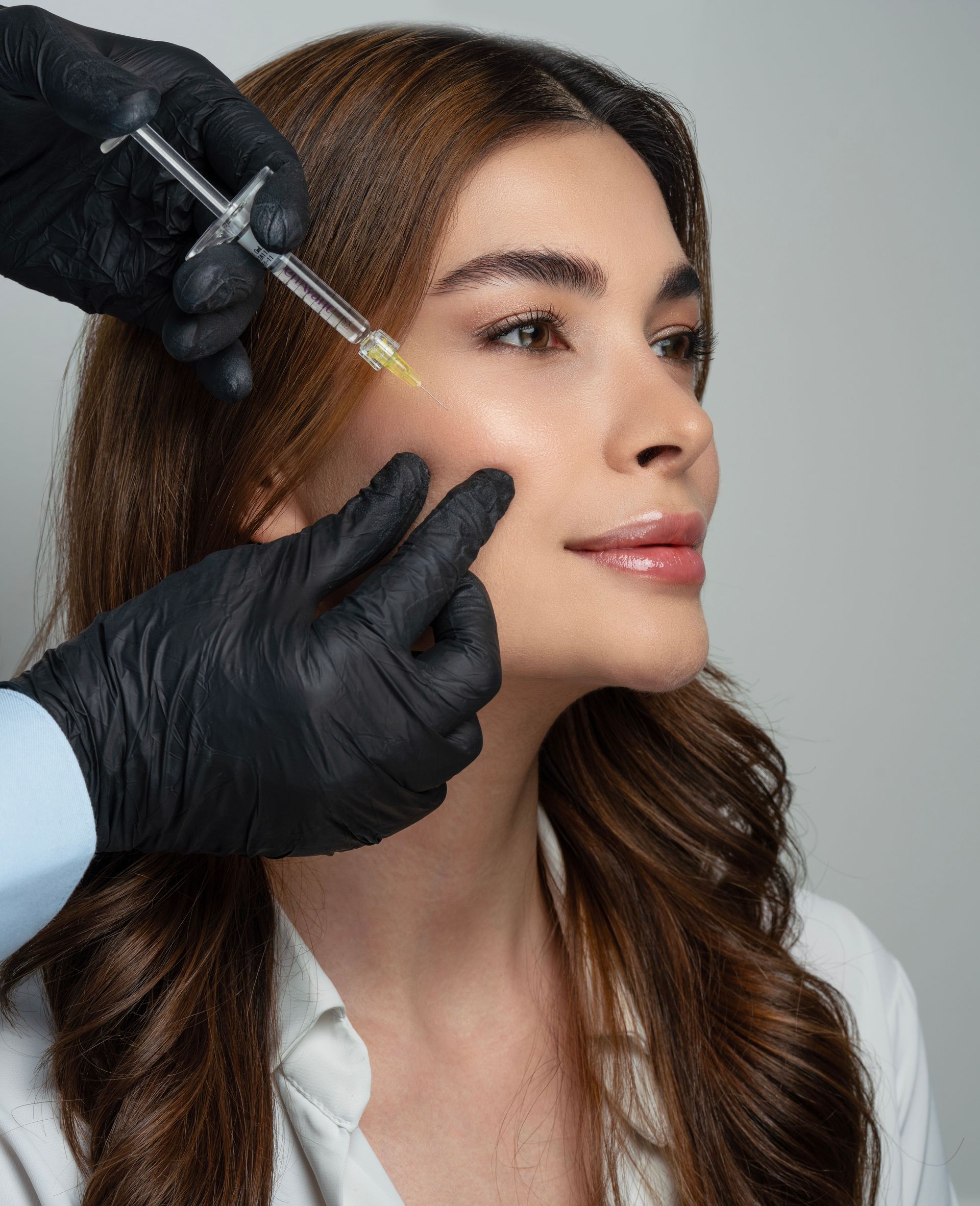
Tear troughs and sunken temples
The skin under the eye is the thinnest on the entire face, and the filler is placed there very delicately and precisely. This area also reacts strongly to fluid retention, which is exactly what happens when you lie with your face in the pillow.
After a tear trough treatment, sleeping with your head elevated is at least as important as sleeping on your back. Place an extra pillow under your head so that your head is higher than your heart. This helps drain fluid instead of allowing it to collect under your eyes. Keep this up for the first two nights.
The same principle applies to the temples, meaning the area at the side of your forehead. This area almost always touches the pillow when you sleep on your side. Here too, sleeping on your back for two nights is advisable.
Biostimulators follow different rules
This point is missing from almost every aftercare page you find online, and it is important. Not everything injected with a needle is a hyaluronic acid filler.
Biostimulators such as poly-L-lactic acid and calcium hydroxylapatite work very differently. They do not add volume; they stimulate your own skin to produce collagen. As a result, the visible outcome only develops over weeks to months, not immediately after treatment.
That difference affects aftercare. With some biostimulators, your practitioner will specifically instruct you to massage the treated area actively during the first few days, according to a set schedule. This is the exact opposite of the rule that you should not touch your face. So anyone who blindly applies the standard advice for hyaluronic acid fillers to a biostimulator may be doing the wrong thing.
When it comes to sleeping position, biostimulators are generally less sensitive than soft fillers because there is no gel that can shift. However, swelling and tenderness still matter. Always follow the protocol given to you by your own practitioner, rather than relying on a general article. Including this one.
After Botox, the advice is different
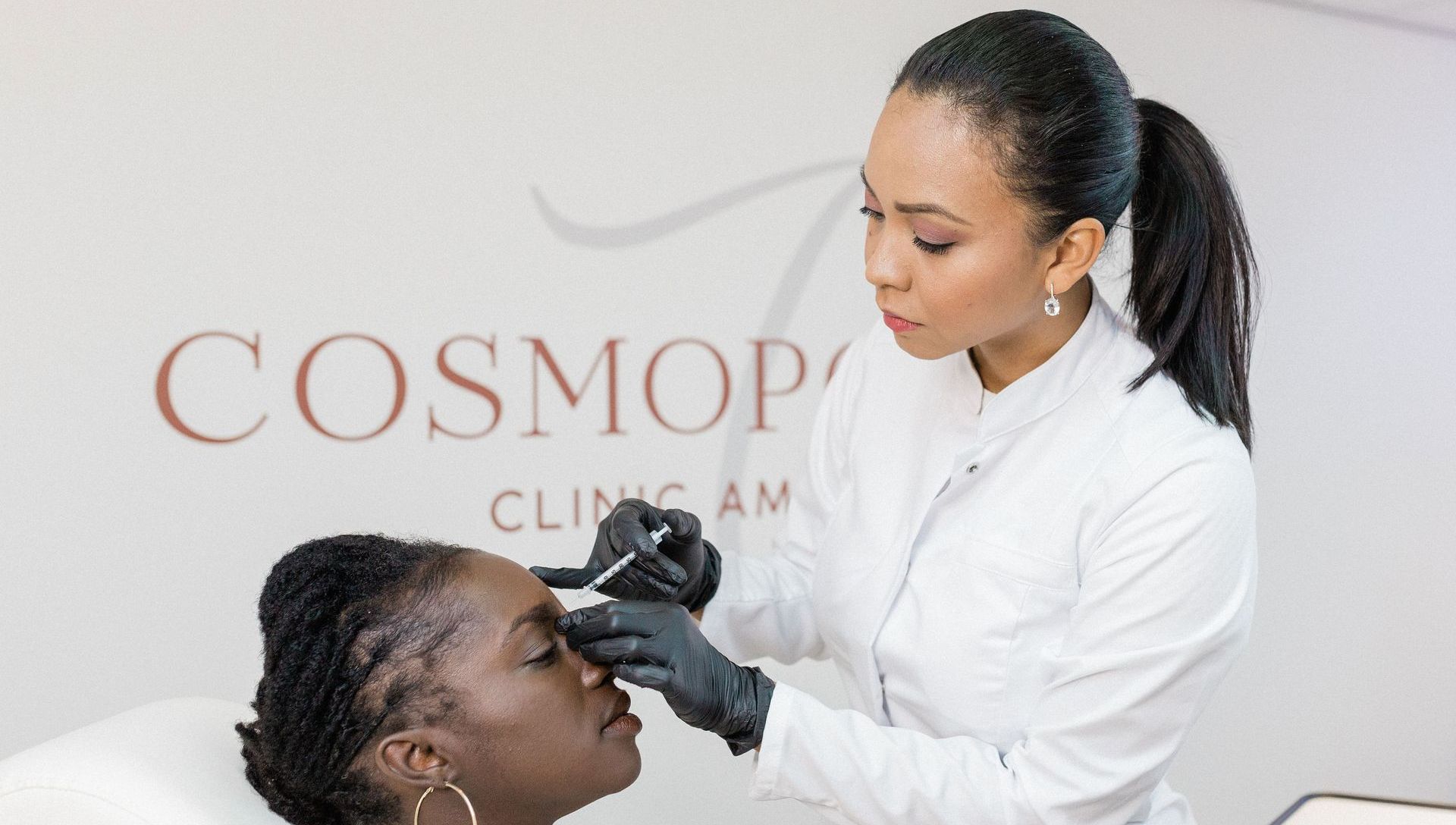
Botulinum toxin is not a gel but a liquid that is injected into a muscle and binds there. The risk is not that something will shift because of a pillow, but that during the first few hours the liquid may spread to a muscle where it does not belong. This can, for example, cause one eyelid to droop lower than the other.
That is why the time window is much shorter with botox, but stricter during that short period. Do not lie flat during the first four hours, not even on your back. Stay upright, meaning sitting or standing. Do not rub or massage the treated area. Skip the gym, sauna and steam room that day.
Sleeping on your side is usually not a problem the night after Botox, as long as you do not press your forehead into the pillow. If you had Botox and fillers during the same appointment, follow whichever of the two sets of advice is stricter.
What if you wake up on your side anyway
This happens often because you have limited control over what you do in your sleep. Don’t panic.
Accidentally lying on your side for a few hours once will not have a lasting effect in most cases. The product is soft, but not so soft that the weight of your head will permanently push it out of place. You may notice a little more swelling on that side, but it will go down.
Do not try to correct it by massaging or pushing the area yourself. That is the one thing that can genuinely make the situation worse, because you would then be applying directed force to the material. Simply sleep on your back again the following night and assess the result only after two weeks, once the swelling has completely gone down.
If you still see a clear difference between the left and right sides after those two weeks, that is a reason to return to your practitioner. Not because there is any need to panic, but because a small correction is straightforward at that point.
Practical ways to stay on your back
If you are used to sleeping on your side, two nights on your back are easier said than done. A few things that work in practice:
- Place a firm pillow on either side of your body so that you cannot roll over without noticing.
- Use a travel pillow around your neck. It keeps your head in the centre and is surprisingly effective.
- Place a pillow under your knees. This makes lying on your back more comfortable, so you are less likely to turn over.
- Raise the head of your bed instead of simply piling up pillows. Placing a book under the legs at the head of the bed works too.
- Do not schedule your treatment just before a night when you are already likely to sleep poorly, such as before an early flight.
Do you sleep restlessly and really cannot manage it? Tell your practitioner beforehand. Sometimes the timing or choice of product can be adjusted accordingly.
How to tell whether your clinic has given you the right information
The fact that you are looking for this article says something in itself. Good aftercare does not begin when you get home, but in the treatment room.
At a reputable clinic, you will know afterwards which product was used and how much, which layer it was placed in, how long you should sleep on your back and why, what you should and should not do during the first week, which symptoms are normal and which are not, and who to contact if something does not feel right. This information is not simply given to you verbally in passing; you receive it in writing or by email.
If you had to look all of that up online yourself, something went wrong with the information you were given. This says nothing about the quality of the injection itself, but it is something to consider for your next treatment. Fillers wear off after six to eighteen months, so you will face that choice again sooner than you think.
At Cosmopolitan Clinic in Amsterdam, you will receive this information as standard, tailored to the treatment area and the product used. Would you like to know what may be possible for you? You can first read about our filler treatments.
When to contact the clinic
Most side effects after a filler treatment are normal and resolve on their own. Swelling, bruising, some tenderness and small irregularities during the first few days are to be expected.
Do contact your practitioner if your pain is increasing rather than easing, if the skin turns white, purple or mottled, if part of the treated area feels cold or numb, if you notice changes in your vision, or if the swelling has not started to decrease after a week. These symptoms are rare, but they should be assessed promptly.
Not sure? Just call. A clinic that takes its work seriously will not see that as a nuisance, but as a normal part of your treatment.
Sources
| Subject | Sources |
|---|---|
| Guideline: sleep on your back for 24 to 48 hours, including advice for each treatment area. | Fairday Clinics, aftercare article (accessed online 11 September 2026) |
| Advice to sleep on your back with your head elevated on the first night. | ABC Clinic, aftercare article, 26 July 2025 (accessed online 11 September 2026) |
| Advice not to lie flat with your face on the pillow for the first six hours, to prevent localised pooling. | ILA Kliniek, filler treatment aftercare: do's and don'ts, 14 February 2023 (accessed online 11 September 2026) |
| Description of filler migration and its causes. | JECT Clinics and Ivy Clinics, articles about filler migration (accessed online 11 September 2026) |
| General information on how hyaluronic acid fillers, biostimulators and botulinum toxin work. | Cosmopolitan Clinic Amsterdam clinical practice |
Frequently asked questions
How long should I avoid sleeping on my side after fillers?
Follow forty-eight hours as a general guideline, with the first night being the most important. For lips and tear troughs, follow the full forty-eight hours. With deeper filler in the cheek or jawline, twenty-four hours is usually sufficient. From the third night onwards, you may cautiously sleep on your side again.
Can a filler really shift because of a pillow?
In the first few days, prolonged pressure on one side can cause the product to shift slightly, especially with soft fillers placed just beneath the skin. This is different from filler migration, which is usually caused by too much volume, incorrect placement or topping up too soon. One night in the wrong position will not cause migration.
Can I sleep on my side after botox?
Yes, but not during the first four hours, and during that period you should not lie flat at all. Stay upright for the first four hours. The following night, you can usually sleep on your side again, as long as you do not put pressure on the treated area.
What should I do if I wake up on my side anyway?
Nothing. Do not massage, press or try to correct it. Sleep on your back again the following night and only assess the result after two weeks. If you still see a clear difference between the left and right sides then, contact your practitioner.
Does the same advice apply to biostimulators?
No. Biostimulators do not add volume; they stimulate your own collagen production, and some of these products specifically require a massage schedule during the first few days. Always follow the protocol given to you by your own practitioner.
Personalised advice
Are you unsure about your own situation, or do you feel that after treatment elsewhere you were left with unanswered questions? We would be happy to review it with you. During a consultation, we will discuss what was done, what you can expect and whether anything else may be needed.
Contact Cosmopolitan Clinic Amsterdam to make an appointment.