Deep tissue massage for the face in Amsterdam
Deep tissue massage stimulates circulation and improves the condition of the skin. At Cosmopolitan Clinic in Amsterdam, we use this treatment for signs of ageing, scars and tired or dull skin, and as preparation for a facial. Below, you can read exactly what the massage does, what has and has not been demonstrated, and why a course of treatments delivers more than a single session.
Table of contents
- What is deep tissue massage?
- How the massage affects your skin
- What has and has not been demonstrated
- As preparation for a facial
- The treatment, step by step
- Results, treatment course and maintenance
- After the treatment
- When we do not perform the treatment
- Who is the treatment suitable for?
- How much does the treatment cost in Amsterdam?
- Frequently asked questions
- Personalised advice in Amsterdam
What is deep tissue massage?
Deep tissue is found throughout your body and holds your muscles, bones and organs in place. In the skin, it consists mainly of collagen and elastin fibres: collagen provides firmness, while elastin provides resilience.
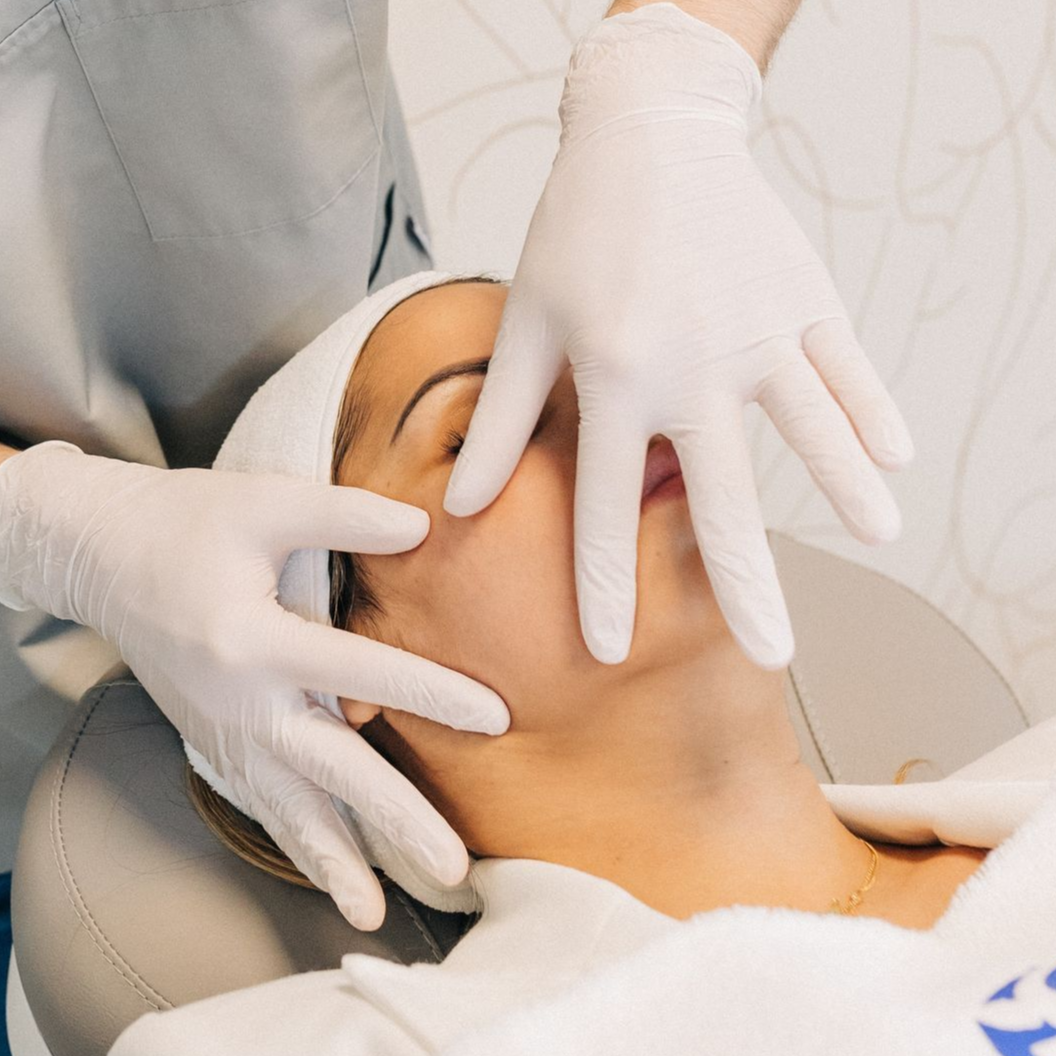
Deep tissue massage originated in physiotherapy, where the technique is used to loosen stiff tissue. The same approach is used on the face, but more gently: deep, firm strokes work the layers beneath the skin rather than just gliding over the surface.
So this is not a relaxation massage. The techniques work deeper and are firmer than those used in a regular facial massage, and you will feel that.
How the massage affects your skin
The deep, intensive massage stimulates the skin’s repair process. This activates blood circulation and cell renewal, and increases the absorption of active ingredients. It also refines the skin’s texture and gives it a healthy, fresh glow.
Improved circulation is the driving force. Better-circulated skin receives more oxygen and nutrients, laying the foundation for everything that follows: a fresher complexion, skin that feels more supple, and better absorption of products applied to it.
What has and has not been demonstrated
We are more candid about this than is usual in this industry, because that is what you should expect from a clinic.
What has been studied.
In a randomised study of 34 women, published in the Journal of Cosmetic Dermatology in 2025, participants performed a ten-minute facial massage five times a week for eight weeks. Facial contour became measurably tighter, with a change of just over two to three millimetres, and skin elasticity improved by seven to nine per cent. Both results were statistically significant.
In laboratory research from 2017, published in PLOS ONE, researchers measured the effects of massage on the skin’s building blocks using donor skin. After ten days of treatment, the production of procollagen, tropoelastin, fibrillin and decorin, among other substances, increased. In women aged 65 to 75, massage in the same study also enhanced the effect of a skincare product on wrinkles and skin texture.
What has not been demonstrated.
These studies looked at facial massage in general and used a device or roller. There has been very little research specifically on hands-on deep tissue massage for the face using firm strokes. Whether the effects last has also not been studied. And increased production of building blocks was measured in donor skin in a laboratory, not in people receiving treatment.
What we conclude from this.
The evidence is promising and the effects measured are real, but they were achieved through repeated treatments over several weeks, not in a single session. That’s why we recommend a course of treatments rather than a one-off, and don’t promise lasting results without maintenance. Anyone who tells you that one massage will rejuvenate your skin is claiming more than the evidence supports.
As preparation for a facial
Deep tissue massage is also a wonderful addition to a facial. Stimulating the deep tissue beforehand significantly improves the absorption of active ingredients. The skin is better oxygenated, more active and absorbs nutrients and serums more deeply, resulting in a more powerful, longer-lasting outcome from your facial.
That’s also why we include the massage in our Intensive facial. You can also book the massage on its own, for example as a course of treatments. During your consultation, we’ll discuss what makes the most sense for you.
The treatment, step by step
- We start with a brief consultation. The skin therapist examines your skin and asks about previous treatments, medication and skin concerns.
- The skin is cleansed, then a lubricant or oil is applied.
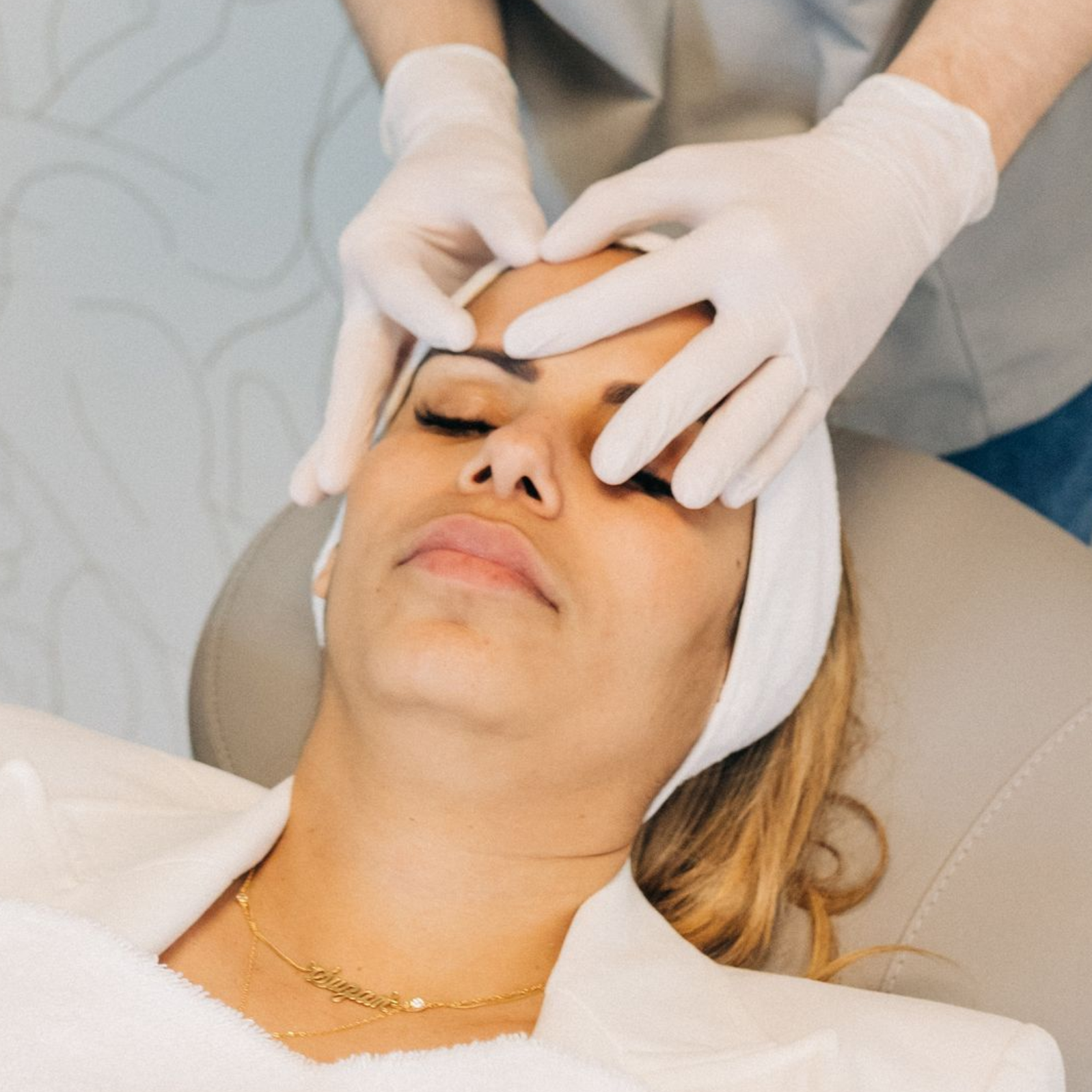
- Using deep, firm strokes, we work on the deep tissue from the jawline up to the forehead, and on the décolletage if desired.
- The treatment ends with a nourishing product, which is absorbed more effectively thanks to improved circulation.
- The treatment takes about thirty minutes.
The strokes can feel firm, especially the first time and in areas where the tissue is stiff. Let us know if it feels too intense, and your skin therapist will adjust the pressure.
Results, treatment course and maintenance
Immediately after treatment, the skin is often a little pink and feels more supple. This is a sign that circulation has been stimulated.
For results that last beyond those first few hours, repeat treatments are needed. We recommend 4 to 6 sessions, every two weeks, for the best results. This is consistent with research findings: measurable improvements in firmness and contour appeared after weeks of repeated massage, not after a single session.
Improved blood circulation and skin texture. Fine lines become less noticeable and the skin feels firmer, with a fresh, energized complexion. Results vary from person to person and depend on your age, skin condition and lifestyle.
After completing a treatment course, the best way to maintain your results is with occasional maintenance treatments, as with other skin-rejuvenating treatments.
After the treatment
You can get back to your usual activities right away. A few tips for the best results:
- Drink a little extra water for the rest of the day.
- Avoid strenuous exercise, saunas and sunbeds that day.
- Avoid using harsh products such as strong acids or retinol on the day of your treatment.
- Apply sunscreen in the days after your treatment, as increased circulation can make the skin more sensitive to the sun.
Some redness or a warm feeling in the first few hours is normal. If your skin remains irritated or you notice small bruises, please let us know.
When we do not perform the treatment
There are situations in which we would prefer to wait or refer you elsewhere:
- If you have an active infection, inflammation or open wound in the treatment area.
- During an acne or rosacea flare-up, as firm pressure may irritate the skin further.
- If you have fresh scars that are still healing.
- Soon after treatment with a muscle relaxer or a filler. We advise against massaging the area after these treatments, so it’s important to get the timing right. Always let us know if you’ve recently had injectables.
- If you take blood thinners, as you may bruise more easily. This isn’t an absolute contraindication, but it’s important to let us know beforehand.
If you’re not sure whether it’s right for you, ask during your consultation. It’s better to skip a session than to irritate your skin.
Who is the treatment suitable for?
This treatment is ideal for signs of ageing, scars and tired or dull skin. It is also a good option if you are having a facial and want to get more out of it, as the massage is performed beforehand.
The treatment is non-invasive, involves no needles and requires no downtime. That makes it one of the most accessible treatments we offer.
How much does the treatment cost in Amsterdam?
A deep tissue massage at Cosmopolitan Clinic in Amsterdam costs €60,00 for a thirty-minute treatment. For a course of 4 to 6 sessions, we will discuss the details with you beforehand so you know what to expect.
If the massage is part of a more comprehensive facial, it is included in the price of that treatment.
Frequently asked questions
Is deep tissue massage painful?
The strokes are firmer than in a regular facial massage and can feel sensitive, especially the first time. They shouldn’t really hurt. Let us know, and your skin therapist will adjust the pressure.
When will I see results?
Immediately after the treatment, your skin looks fresher and more flushed. Improvements in firmness and contour require repeat treatments: research measured these after weeks of regular massage, not after a single session.
How many treatments will I need?
We recommend 4 to 6 sessions, spaced two weeks apart. After that, maintain your results with an occasional maintenance treatment.
Does it really work against wrinkles?
Research has shown that facial massage can measurably improve skin elasticity and facial contours, and make fine lines less noticeable. There is little research on this specific type of massage. We therefore describe it as a skin-rejuvenating treatment, not a wrinkle treatment.
Can I combine it with Botox or fillers?
Yes, but not in the same week. After injectables, we recommend leaving the treated area alone. So book your massage before your injectables, or leave enough time between treatments. We can advise you during your consultation.
Is it suitable for every skin type?
In most cases, yes. We prefer to wait if you have active acne, a rosacea flare-up or a damaged skin barrier.
Can I go straight back to work afterwards?
Yes. Expect your skin to be slightly pink for the first few hours. There is no downtime.
References
| Claim | Source |
|---|---|
| Eight weeks of facial massage improved facial contour by just over 2 to 3 millimetres and skin elasticity by 7 to 9 per cent; both results were statistically significant | Ahn et al., Comparative Effects of Facial Roller and Gua Sha Massage on Facial Contour, Muscle Tone, and Skin Elasticity, Journal of Cosmetic Dermatology (2025), randomized study of 34 women |
| In laboratory research on donor skin, massage increased the production of procollagen, tropoelastin, fibrillin and decorin, among other substances; in women aged 65 to 75, massage enhanced the effect of a skincare product on wrinkles and skin texture | Caberlotto et al., Effects of a skin-massaging device on the ex-vivo expression of human dermis proteins and in-vivo facial wrinkles, PLOS ONE (2017) |
| There has been very little research specifically on deep tissue massage for the face; the available studies focus on facial massage using a device or roller |
Personalised advice
Would you like to know whether deep tissue massage is right for your skin, or whether another skin-rejuvenating treatment might be more beneficial? Visit Cosmopolitan Clinic in Amsterdam for a no-obligation consultation. We’ll assess your skin and give you an honest idea of what to expect. Explore all our skin-rejuvenating treatments or book an appointment.