Botox for teeth grinding and jaw clenching in Amsterdam
Waking up with a stiff jaw, a headache above your ears, or a dentist telling you your teeth are wearing down. If you suffer from teeth grinding or jaw clenching, an injectable treatment using a wrinkle relaxer (botulinum toxin) can offer a solution. At Cosmopolitan Clinic in Amsterdam, we use this to reduce the strength of the chewing muscle, thereby decreasing the pressure on your jaw and teeth. Below, you can read an honest account of what this treatment does and does not do, when it is better to visit your dentist first, and what it costs.
Table of contents
- What are teeth grinding and jaw clenching?
- By what you notice
- Start with your dentist
- How does a wrinkle relaxer work in the chewing muscle?
- What the treatment does and does not do
- The treatment step by step
- Result and how long it lasts
- Recovery and aftercare
- Risks and side effects
- Is the treatment covered?
- Who is the treatment suitable for?
- How much does the treatment cost in Amsterdam?
- Frequently Asked Questions
- Personal advice in Amsterdam
What are teeth grinding and jaw clenching?
Teeth grinding and jaw clenching are collectively called bruxism. With grinding, your teeth and molars slide forcefully against each other; with clenching, you bite them together for a prolonged period without moving. It usually happens unconsciously, often at night, and many people only find out about it from their partner or the dentist.
The muscle that does the work is the chewing muscle on the side of your jaw: the masseter muscle. That muscle is relatively one of the strongest in your body, and that is precisely why prolonged grinding causes damage.
Important to know: bruxism is not a problem of your jaw, but of its control. The signal originates from the central nervous system, often during sleep. Stress, sleep problems, certain medications, and smoking play a role. This fact also determines what treatment can and cannot achieve, and we will return to this later.
By what you notice
Many people come to us with a combination of these complaints:
- A stiff or painful jaw, especially upon waking up.
- Headache that starts at the temples or just above the ears.
- Teeth and molars that become visibly shorter or flatter, or crumble.
- Sensitive teeth due to thinning enamel.
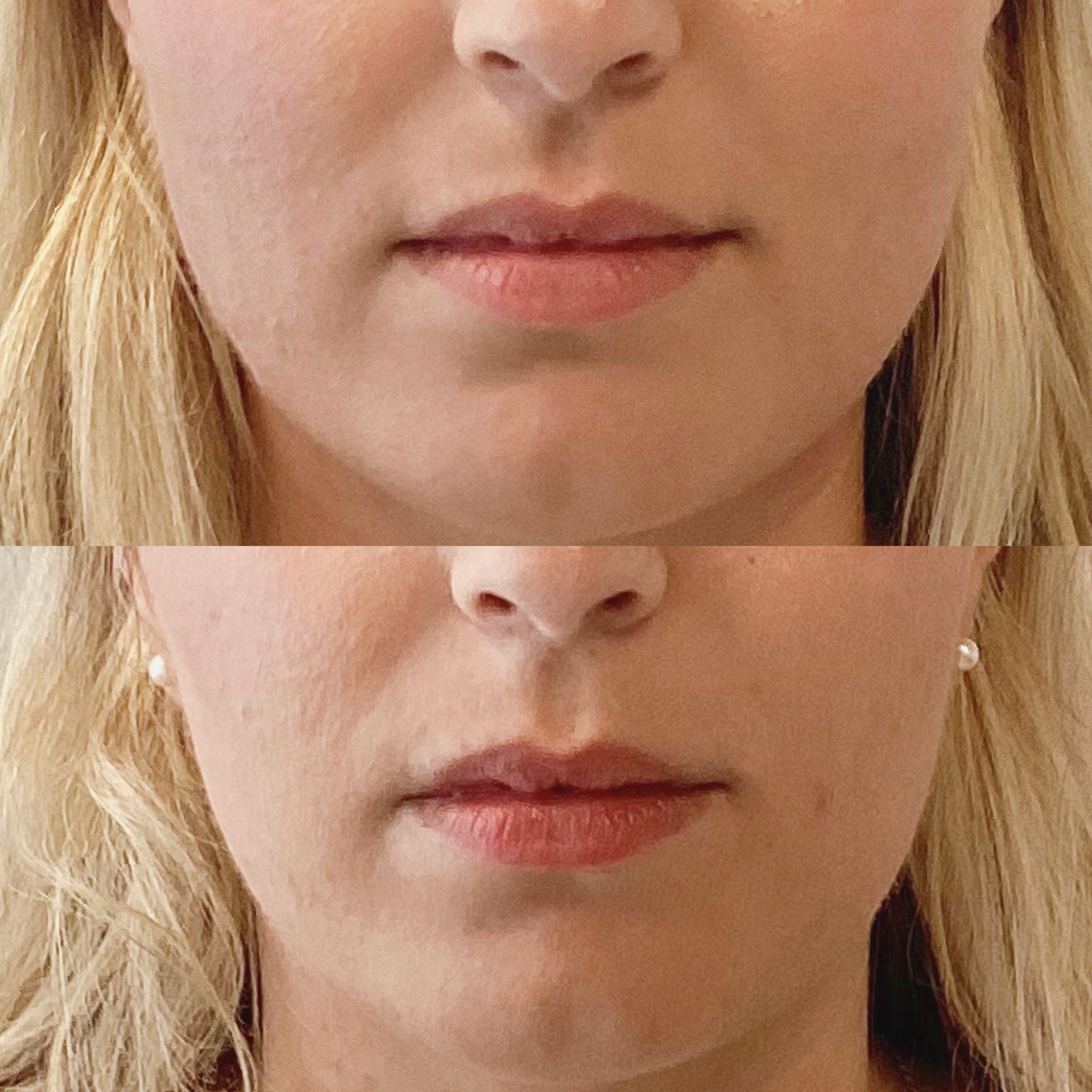
- A jaw angle that appears wider because the chewing muscle has thickened due to daily strain.
That last point is particularly noteworthy. A chewing muscle that has been working overtime for years grows larger, just like any other muscle you train. This is called masseter hypertrophy, and it gives the lower part of the face a more angular, broader appearance.
Start with your dentist
We prefer to say this ourselves rather than you reading it elsewhere: a wrinkle relaxer is not the first step for bruxism.
The usual route is via the dentist. They assess the wear on your teeth and, in many cases, make a bite protection plate, commonly known as a grinding plate or mouthguard. Such a plate does not stop grinding, but it absorbs the forces and protects your teeth. The Clinical Practice Guideline on Dental Wear from the Dutch Institute for Oral Health Care does mention this bite protection plate, but not botulinum toxin.
Moreover, botulinum toxin is not included in the registered indications for bruxism in the Netherlands. In 2024, a vision article by Lobbezoo and colleagues appeared in the Dutch Journal of Dentistry under the title "Treatment of bruxism with botulinum toxin: think before you act". The gist: view it as a last resort, not the first, and do not automatically consider it safe.
We share that reluctance. Therefore, treatment with us is only beneficial if you have already visited the dentist, if a grinding splint provides insufficient relief or is unsustainable, or if the chewing muscle itself is the cause of the complaint: pain, tension, or an excessively widened jaw angle. If you come to us without following that process, we will refer you to your dentist first. That is not a way to put you off; that is the correct order.
How does a wrinkle relaxer work in the chewing muscle?
A wrinkle relaxer contains botulinum toxin. The substance temporarily interrupts the signal from the nerve to the muscle, reducing the muscle's ability to contract. In the chewing muscle, this means: you can still chew and talk normally, but the peak force with which you unconsciously clench or grind your teeth decreases.
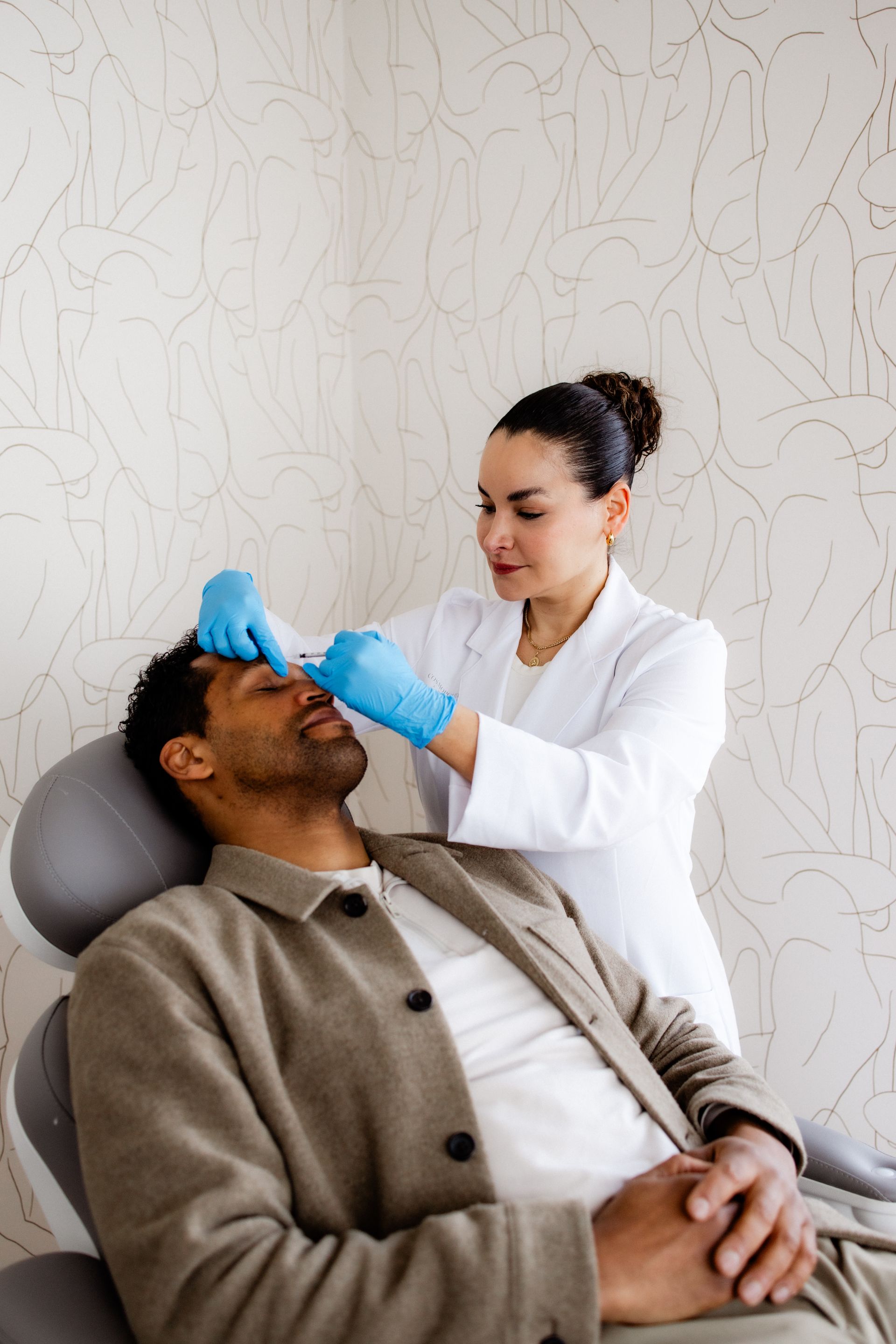
The doctor injects a small amount into the chewing muscle on both sides of the jaw. The amount needed depends on the strength of your chewing muscle and the severity of the symptoms. A chewing muscle is considerably larger and stronger than the small muscles around the eyes, so the dosage is higher here than for a standard wrinkle treatment.
What the treatment does and does not do
We are deliberately precise here, because you often read otherwise elsewhere.
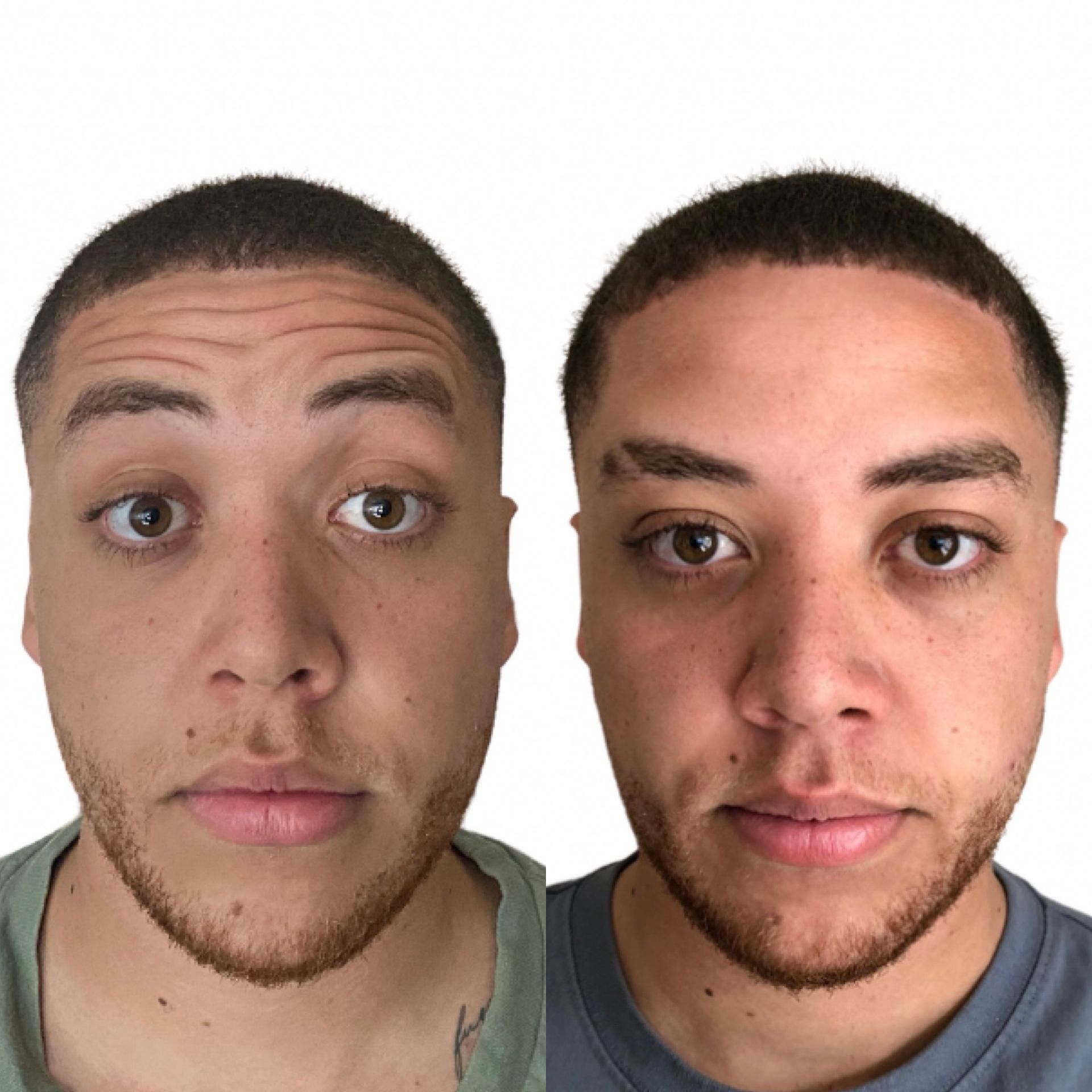
What the treatment does do. The force on your jaw and teeth decreases. The Dutch Journal of Dentistry has described that treatment with botulinum toxin for bruxism is associated with fewer symptoms, less pain, fewer temporomandibular joint complaints, and less tooth wear. Furthermore, a thickened chewing muscle gradually becomes slimmer, making the jaw angle appear softer.
What the treatment does not do. It does not make the grinding itself disappear. The control lies in the nervous system, and that does not change with an injection into the muscle. You may still clench or slide your teeth, just with less force. You read on other websites that the grinding "even stops completely." We cannot deliver on that, and therefore we do not promise it.
It is not a cure either. The effect is temporary, and the cause remains. If you sleep poorly or are under prolonged stress, this will continue to require attention alongside the treatment.
The treatment step by step
- We start with a consultation. The doctor asks about your symptoms, what the dentist saw, and what you have already tried.
- Bite down firmly a few times so that the doctor can feel how heavy and how high your chewing muscle contracts.
- The doctor determines the injection points in the chewing muscle, on both sides.
- The injections are administered with a thin needle. Anesthesia is usually not necessary.
- The treatment takes about ten to fifteen minutes.
After that, you can immediately continue with your day. Eating and drinking are allowed as usual.
Result and how long it lasts
The effect of botulinum toxin typically begins 24 to 48 hours after treatment, with the maximum effect after three to ten days. In the case of the chewing muscle, most people first notice it as a less powerful sensation when biting down firmly. The gradual alleviation of symptoms follows thereafter.
The effect lasts for several months. The exact duration varies from person to person and depends on the dosage and the strength of your chewing muscle. After that, strength returns and the treatment can be repeated. If the chewing muscle becomes slimmer over multiple treatments, less is often needed in the long run.
Recovery and aftercare
You can go home or return to work immediately after the treatment. For the best results, we provide a few simple tips:
- Stay upright for the first four hours and do not lie flat.
- Do not rub or massage the injection sites, so that the product stays in place.
- Avoid intensive sports, saunas, and tanning beds that day.
- Do not eat extremely hard or tough food for the first few days, so that you can gradually get used to the changed biting force.
A small bruise or some redness at the injection sites usually disappears on its own within a few days.
Risks and side effects
Most side effects are mild and temporary: a bruise, slight redness, or swelling at the injection sites.
Two things are specific to this area. The first is reduced biting force. That is exactly the intention, but it may be noticeable during the first few weeks with hard bread, nuts, or tough meat. The second is a feeling of fatigue in the jaw during prolonged chewing, which decreases as you get used to it.
And then the point we prefer to raise ourselves. The professional community is critical of the repeated use of botulinum toxin in the masseter muscle. In the aforementioned opinion piece in the *Nederlands Tijdschrift voor Tandheelkunde*, the authors state that the agent is wrongly considered self-evidently safe for bruxism, and that it should be a last resort. That is the reason why we do not simply continue treatment: with every repetition, we reassess whether it is necessary and whether the dosage can be reduced.
Is the treatment covered?
This is the most frequently asked question regarding this treatment, and the honest answer is: don't count on it.
Cosmetic treatments are not covered by basic health insurance. Some supplementary packages reimburse a portion if there is a medical reason and the treatment is performed by a BIG-registered physician, but this varies significantly by insurer and policy. There are also insurers that do nothing about it.
What you can do: ask your dentist to put their findings in writing and submit this, along with the treatment description, to your own insurer before making an appointment. That way, you will know what to expect in advance. We cannot make any promises regarding this, as we do not see your policy.
Who is the treatment suitable for?
The treatment is suitable for adults who grind or clench their teeth and for whom the usual route via the dentist has yielded insufficient results, or for whom the chewing muscle itself is the cause of the complaint due to pain, tension, or an excessively widened jaw angle.
The treatment is not suitable during pregnancy or breastfeeding, nor in the case of neurodegenerative disorders or muscle diseases such as myasthenia gravis, ALS, and Lambert-Eaton syndrome. An active infection at the injection site or hypersensitivity to botulinum toxin also excludes the treatment.
If your symptoms are primarily dental damage and you have not yet been to the dentist, then that is the first step, not this treatment.
How much does the treatment cost in Amsterdam?
Treatment for teeth grinding and jaw clenching at Cosmopolitan Clinic in Amsterdam starts from €350. The chewing muscle requires a higher dosage than a standard wrinkle treatment, which explains the price difference compared to, for example, a treatment for the frown lines or the forehead.
During the consultation, you will receive a price tailored to your chewing muscle and the severity of your symptoms. You are under no obligation until you know what to expect.
Frequently Asked Questions
Does this treatment stop teeth grinding?
No. The control of grinding is located in the nervous system and is not changed by an injection into the muscle. What does change is the force with which you clench or grind, and as a result, the consequences decrease.
Does it protect my teeth against wear?
It has been described that wear is reduced because less force is exerted on the teeth. It is not a guarantee and it does not replace your dentist's assessment. A bite guard remains useful in addition.
Can I still chew normally?
Yes. Chewing and talking are fine. During the first few weeks, hard or tough food might be a bit more difficult because the peak force is lower.
How quickly will I notice something?
The effect typically begins within 24 to 48 hours and is usually fully established after three to ten days. The gradual calming of jaw complaints follows thereafter.
How long will it keep working?
A few months. The exact duration depends on the dosage and the strength of your chewing muscle. After that, the treatment can be repeated.
Is it covered by my health insurance?
Usually not covered by basic insurance. Some supplementary policies reimburse a portion in case of a medical reason. Check with your own insurer before making an appointment.
Will it make my jawline narrower?
If your chewing muscle has thickened due to years of grinding, it gradually becomes slimmer with repeated treatment and the jaw angle appears softer. With a normal chewing muscle, the shape hardly changes.
Personal advice in Amsterdam
Are you unsure if this treatment is right for you, or have you not yet visited your dentist? Our cosmetic physicians, including Drs. Leanne Wong (Cosmetic Physician KNMG) and Drs. Melissa Gomez (BIG-registered, affiliated with the NVCG), will assess your situation during a no-obligation consultation and will honestly tell you if another route is better. View all our wrinkle relaxers or schedule a consultation at Cosmopolitan Clinic in Amsterdam.
Source
| Claim | Source |
|---|---|
| Botulinum toxin for bruxism should be a last resort and is wrongly considered safe as a matter of course. | Lobbezoo et al., Treatment of bruxism with botulinum toxin: think before you act, Dutch Journal of Dentistry (2024), opinion article |
| Treatment with botulinum toxin is associated with fewer symptoms, less pain, fewer temporomandibular joint complaints, and less tooth wear; the effect lasts for several months. | Brand Kanters et al., Dutch Journal of Dentistry (2023). |
| The bite protection plate is mentioned for tooth wear, botulinum toxin is not. | Clinical Practice Guideline Tooth Wear of Permanent Teeth, Oral Health Care Knowledge Institute (2025) |
| Bruxism is not included in the registered indications for botulinum toxin A. | Pharmacotherapeutic Compass, botulinum toxin A (drug register) |
| Effect begins 24 to 48 hours after treatment, maximum effect after 3 to 10 days. | NVDV, Guideline on botulinum toxin therapy for cosmetic indications (professional guideline) |
Make an appointment
Would you like to know if the Radiesse treatment is suitable for your skin and wishes? During a personal consultation, you will receive honest and medically sound advice.
You are welcome for a no-obligation appointment at Cosmopolitan Clinic.
Botox treatment