What are the disadvantages of a lip flip?
A lip flip sounds appealing: a few units of botulinum toxin in the upper lip, no filler, no added volume, and yet a lip that shows slightly more. The treatment takes less than ten minutes and costs 95 euros at our clinic. That is precisely why the question of its downsides ranks so highly on Google: when something is so quick and inexpensive, where is the catch?
The honest answer is that a lip flip carries few serious risks, but it does have several limitations that are rarely explained properly beforehand. The result is subtler than social media photos suggest, it lasts for less time than other botulinum toxin treatments, and if you do not like it, you cannot undo it. Below, we list all the drawbacks, with figures from published research and the relevant source.
Table of contents
- The biggest drawback: the result is subtle and short-lived
- You cannot undo a lip flip
- Risk of asymmetry and an uneven smile
- Temporary difficulty whistling, using a straw and pronouncing certain sounds
- Why over-treatment is the most common mistake
- Who a lip flip is not suitable for
- Medical contraindications, pregnancy and breastfeeding
- The costs add up because of the repeat treatments
- Lip flip or lip filler: which problem does each solve
- What to do if you are unhappy with the result
- What to look for when choosing a clinic
- Frequently asked questions
- Sources
The biggest drawback: the result is subtle and short-lived
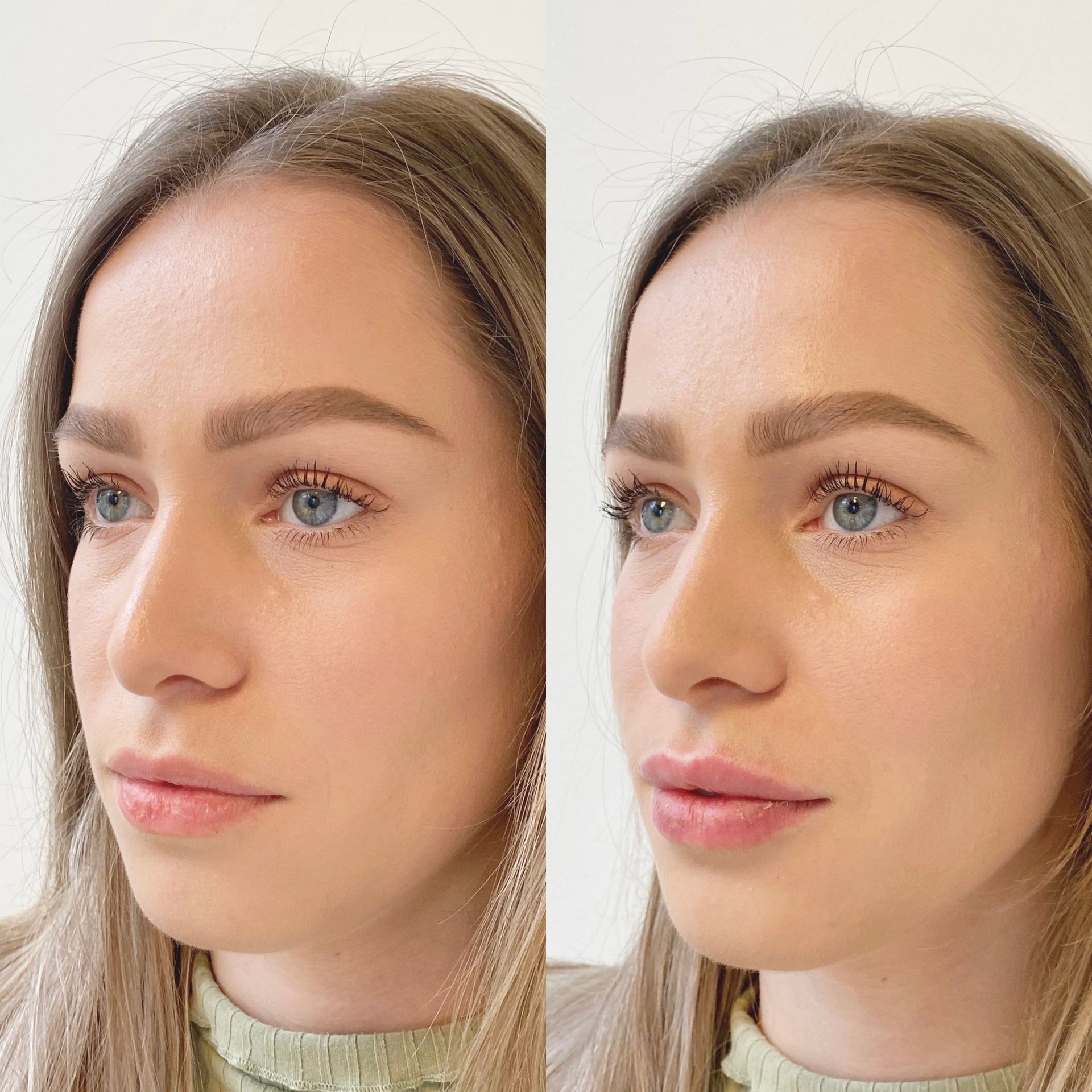
A lip flip involves injecting a small amount of botulinum toxin into the ring muscle around the mouth, just above the upper lip. The muscle relaxes, the lip edge rolls slightly outward and a little more lip tissue becomes visible. It does not add a single millimetre of volume. The lip does not become fuller; it sits differently.
Exactly how much difference does it make? This was measured in 2026 in a clinical study published in Aesthetic Plastic Surgery. In seventeen women who received four units of onabotulinumtoxinA—two per side—the visible height of the upper lip increased from 8.31 millimetres to 8.74 millimetres on day fifteen. That is an increase of approximately 0.43 millimetres. On day thirty it measured 8.56 millimetres, and by day ninety the lip, at 8.35 millimetres, had almost returned to its original measurement.
Almost half a millimetre. That is a real effect, and satisfaction in that same study was high, but it is not a transformation. Anyone expecting a noticeably fuller lip based on before-and-after photos on Instagram is likely to be disappointed. That is not a risk of the treatment; it is an expectations problem, and by far the most common reason people are disappointed afterwards.
Its longevity is also disappointing compared with other botulinum toxin treatments. According to the Dutch Pharmacotherapeutic Compass, a frown-line treatment lasts four to six months. Cleveland Clinic gives a duration of two to five months for a lip flip, while the measurements above show that the measurable effect has virtually disappeared by around day ninety. The ring muscle around the mouth is used all day, when talking, eating and laughing, which shortens the treatment’s duration.

You cannot undo a lip flip
This is the drawback mentioned least often, yet it carries the most weight. With a hyaluronic acid filler, there is a way out. If you are unhappy with the result or a complication occurs, a doctor can inject the enzyme hyaluronidase to dissolve the filler. A 2024 review in JMIR Dermatology calls hyaluronidase indispensable in aesthetic practice, precisely because it can safely treat most filler complications.
There is no such thing for botulinum toxin. There is no antidote that reverses the effect. Cleveland Clinic puts it plainly: if you are unhappy with how you look, the treatment cannot be reversed and you have to wait for the botulinum toxin to wear off.
In practical terms, this means the following. If it sits too high, too low, is too much or is uneven, the only solution is time. Allow six weeks to several months for the muscle to fully resume working. In the meantime, an experienced doctor may sometimes make a minor adjustment by lightly treating the other side as well, but the effect cannot be reversed. That makes your choice of practitioner more important with a lip flip than with a filler, not less.
Risk of asymmetry and an uneven smile
A face consists of four layers, and all four change: skin, fat, retaining ligaments and bone. When the jawline starts to sag, they change together.
The skin produces less collagen and elastin and therefore becomes looser than the structures beneath it. The fat compartments in the midface lose volume. On our own page about cheek filler treatments you can read that this starts from around the age of thirty. The result is that the upper face loses volume while weight shifts downward.
Then there are the retaining ligaments, strands of connective tissue that anchor the skin at fixed points to the underlying tissue. These weaken. The tissue then sags between the anchored points and bulges out there. That is why sagging cheeks do not appear as an even swelling, but as a bulge with a clear indentation in front of it.
And then there is the layer that almost nobody writes about.
Temporary difficulty whistling, using a straw and pronouncing certain sounds
The ring muscle around the mouth does more than maintain the shape of your lips. You use it to purse your lips, suck, whistle and form consonants such as p, b and w. When the muscle relaxes, these functions may temporarily become less smooth.
The complaints reported most often in practice are:
- difficulty drinking through a straw
- being unable to whistle, or finding it more difficult
- the feeling that the p and b sounds are less distinct
- lips that do not close as well while drinking, which may cause you to spill
- a stiff or numb feeling around the lips in the first few weeks
For most people, this is no more than a minor inconvenience. For anyone who plays a wind instrument, sings, speaks professionally or gives frequent presentations, it is a serious consideration. This is precisely when we sometimes advise people against having the treatment, or recommend waiting until after a performance or important period.
Why overdosing is the most common mistake
A lip flip uses very small amounts. Cleveland Clinic describes an average of two to four units in the upper lip and two in the lower lip. The study in Aesthetic Plastic Surgery used four units in total. By comparison, a frown-line treatment uses several times that amount.
That small margin is at the heart of the problem. The difference between a subtle result and a lip that no longer closes properly is just a few units. If too much is injected, or if it is injected too deeply or too far from the lip line, the muscle relaxes more than intended.
The Dutch Pharmacotherapeutic Compass adds a second reason to keep the dose low. With repeated injections, resistance can develop, and the recommendation is to limit that risk by using the lowest effective dose. With a treatment you repeat a few times a year, that is not merely a theoretical concern.
The key takeaway: ask beforehand how many units will be injected and where. A practitioner who cannot answer this specifically, or who uses the same standard amount for everyone, is not taking your anatomy into account. On our page about botulinum toxin treatments you can read how we make that assessment.

Who a lip flip is not suitable for
This technique does not work well for every lip. A lip flip works best on an upper lip that naturally has some visible lip tissue and that pulls strongly inward when smiling. In a number of situations, the result is predictably disappointing:
- A very thin upper lip. If there is little lip tissue to roll outward, there is little to make visible. Half a millimetre on very little lip remains very little lip.
- A long distance between the nose and upper lip. With a long philtrum, changing the position of the lip has little effect on the proportions of the face.
- Wanting genuinely fuller lips. Anyone who wants more volume is not looking for a lip flip. In that case, the appropriate option is hyaluronic acid lip filler.
- Unrealistic expectations. Cleveland Clinic explicitly lists this as a reason someone may not be a good candidate, along with an active infection in or around the mouth, such as a cold sore or mouth ulcers.
- Previous lip treatments that did not turn out well. In that case, finding out exactly what is already there is more important than layering on another treatment.
Medical contraindications, pregnancy and breastfeeding
Botulinum toxin A has clear medical contraindications. The Dutch Pharmacotherapeutic Compass lists muscle disorders such as myasthenia gravis, amyotrophic lateral sclerosis and Eaton-Lambert syndrome, as well as an infection at the injection site. Caution is also advised in people with clotting disorders or problems swallowing or breathing. If you develop problems swallowing, speaking or breathing after treatment, seek medical help immediately.
The picture is nuanced when it comes to pregnancy and breastfeeding. The Dutch Pharmacotherapeutic Compass states that botulinum toxin A can probably be used safely during pregnancy and breastfeeding, but that assessment concerns medical applications such as muscle spasms and chronic migraine. With a cosmetic treatment, there is no medical necessity, and Cleveland Clinic explicitly lists pregnancy as a reason not to have a lip flip because there is insufficient safety research. We therefore do not treat during pregnancy or breastfeeding. This is not an alarmist stance; it is a choice not to take a risk you do not need to take.
Always tell us which medication you use. Certain antibiotics and muscle relaxants can enhance the effects of botulinum toxin.
The costs add up because of the repeat treatments
A lip flip is an inexpensive treatment in itself. At Cosmopolitan Clinic, it costs 95 euros, as you can see in our price list. The drawback is not the price per treatment, but the need to repeat it.
If you want to maintain the result all year, a duration of two to five months works out at approximately three to five treatments per year. That is €285 to €475 per year, every year, for an effect of about half a millimetre. Our lip filler starts at €300, but lasts considerably longer. Over several years, the calculation reverses.
This is not an argument against a lip flip. It is, however, a reason to decide beforehand what you actually want to achieve, so that you do not repeat a treatment for years that does not serve that goal.

Lip flip or lip filler: which problem does each one solve
Confusing these two treatments is the source of most disappointment. They do fundamentally different things.
- A lip flip changes the position of the lip. Botulinum toxin relaxes the muscle, causing the lip edge to roll slightly outward. No added volume; the effect lasts two to five months and cannot be reversed.
- A lip filler changes the volume of the lips. Hyaluronic acid adds fullness and shape. Visible immediately, longer-lasting, and reversible with hyaluronidase.
- A lip flip is suitable if your upper lip pulls inward or largely disappears when you smile, and you do not want additional volume.
- A lip filler is suitable if you want to add fullness to thin lips, create more definition along the lip border or correct asymmetry in volume.
In some cases, they are combined, with the filler providing volume and the lip flip changing the position of the lip. This is a medical decision that only makes sense after assessing your anatomy. What exactly happens during the lip flip treatment in Amsterdam and how that assessment works is explained on the treatment page.
What to do if you are unhappy with the result
Suppose that after ten days you notice that your lip is uneven, you can no longer whistle, or you simply cannot see any difference. This is the step-by-step plan:
- Wait until the full onset period has passed. The effect becomes visible after about a week and then reaches its maximum. Assessing the result on day three is too early and can lead to premature additional treatment.
- Contact the practitioner who injected you. Only that person knows exactly what was injected and where. Do not take your complaint to a second clinic before having that conversation.
- Ask about adjustment, not reversal. In cases of asymmetry, a doctor may consider lightly treating the stronger side as well. If the effect is too strong, there is nothing to do but wait.
- If you experience problems swallowing, speaking or breathing: seek medical help immediately. This is no longer a cosmetic issue.
- Do not schedule an important event immediately after your treatment. We recommend having the treatment at least two weeks beforehand, so you know the full result before it matters.
What to look for when choosing a clinic
Because you cannot undo a lip flip, the practitioner’s quality is the most important factor you can control yourself. In the Netherlands, injecting botulinum toxin is a restricted medical procedure. The Health and Youth Care Inspectorate states that a doctor must perform the treatment, or instruct a practitioner to perform it while being physically present. It is a criminal offence for someone to inject Botox or fillers without a doctor’s involvement.
Practical checks, partly based on the Fillercheck from the Health and Youth Care Inspectorate:
- Check that the practitioner has a valid BIG registration.
- Ask how many units will be injected and where.
- Be wary of exceptionally low prices and of pressure to decide immediately.
- Ask who you should call if something goes wrong, and when that person can be reached.
- Treatments are available for adults aged eighteen and over.
The Inspectorate adds a matter-of-fact warning: even if you have ticked every box, there is never a one-hundred-per-cent guarantee of a good result. You can greatly increase the chances of a good outcome, but you cannot buy one. You can find more background information at the Fillercheck from the Health and Youth Care Inspectorate.
Sources
| Subject | Sources |
|---|---|
| Dose of four units, upper-lip increase from 8.31 to 8.74 millimetres on day 15 and 8.35 millimetres on day 90, with all side effects mild and temporary. | Lip Flip Revisited: Clinical Outcomes and Neuromodulatory Basis of Upper Lip Eversion, Aesthetic Plastic Surgery, 2026. |
| On average, two to four units in the upper lip and two in the lower lip, results visible after about a week, duration of two to five months, treatment not reversible, not suitable for candidates with active mouth infections, unrealistic expectations or pregnancy. | Cleveland Clinic, Lip Flip, patient information. |
| Contraindications: myasthenia gravis, ALS and Eaton-Lambert syndrome; infection at the injection site; seek advice if you experience swallowing, speech or breathing problems; resistance with repeated injections; duration for wrinkle treatment: four to six months. | Dutch Pharmacotherapeutic Compass, botulinum toxin A. |
| Injecting Botox and fillers is a restricted medical procedure; a doctor must perform it or be physically present when delegating it, and it is a criminal offence without a doctor’s involvement. | Health and Youth Care Inspectorate, oversight of Botox and filler treatments. |
| Checks for consumers aged eighteen and over; no one-hundred-per-cent guarantee of a good result. | Health and Youth Care Inspectorate, Fillercheck. |
Frequently asked questions
How long does it take for a lip flip to wear off?
Cleveland Clinic gives a duration of two to five months. In the study published in Aesthetic Plastic Surgery, the upper lip had almost returned to its baseline value by day ninety. So expect to live with the result for around three months, whether you like it or not.
Can a lip flip really make my lips look fuller?
No. No volume is added. The lip rolls slightly outward, making a little more lip tissue visible—measured at approximately 0.43 millimetres on day fifteen. If you want genuinely fuller lips, filler is the appropriate treatment.
Is a lip flip painful?
The injections are brief and superficial. The lip area is more sensitive than the forehead, so you will feel it more than during a frown-line treatment. Swelling, tenderness and numbness during the first few days are normal, as is an occasional bruise at the injection site.
Can I combine a lip flip with lip filler?
It can, and it happens regularly. The filler provides the volume, while the lip flip changes the position of the lip edges. Whether this makes sense in your case depends on the shape of your lips and the distance between your nose and upper lip. This is something to assess during a consultation, not a standard combination treatment.
Can I have a lip flip during pregnancy or breastfeeding?
We do not. There is insufficient safety research into cosmetic use of botulinum toxin during this period, and there is no medical necessity. Cleveland Clinic also lists pregnancy as a reason not to perform a lip flip.
Personalised advice
The disadvantages of a lip flip are manageable, but only if it is clear beforehand whether your lips are suitable and what you can realistically expect. At Cosmopolitan Clinic in Amsterdam, one of our doctors first assesses your anatomy and your goals, and we are also honest about when a lip flip is not the right treatment for you. Want to know what is best for your situation? Book a no-obligation consultation and we will discuss it together.