Spock eyebrows after Botox: how to spot and correct them
With a Spock eyebrow, the outer tip of the eyebrow suddenly points sharply upward after botulinum toxin treatment. The name comes from the character Spock in Star Trek. Doctors also call it the Mephisto sign, after the devil in the Faust legend. You look surprised, stern or questioning, even when you don’t feel that way at all.
It’s understandable to be alarmed. It doesn’t cause permanent damage. It’s a known, temporary side effect of botulinum toxin, and the manufacturer mentions it too. A doctor can usually correct it with a small touch-up. Below, you’ll learn how to recognise it, why it happens, how to tell it apart from a drooping brow or eyelid, and what does and doesn’t help.
Contents
- What are Spock eyebrows?
- How to spot it in the mirror
- Why the outer brow shoots up
- How common is it?
- How we work at Cosmopolitan Clinic
- Spock eyebrow, brow ptosis or drooping eyelid?
- The first two weeks: wait and see before judging
- How a doctor corrects it
- Does it go away on its own?
- What doesn’t help
- How to reduce the risk next time
- Who can treat you?
- Frequently asked questions
- Personal advice
- Sources
What are Spock eyebrows?
With a Spock eyebrow, the middle of the eyebrow stays in place while the tail angles sharply upward. This creates a pointed arch that wasn’t there before. One raised eyebrow gives you a questioning look; both can make you look surprised or stern.
Vistabel and Bocouture are approved in Europe for wrinkles in the upper part of the face. In the product information for these two products, this is called the Mephisto sign. In the Dutch Pharmacotherapeutic Compass, consulted by Dutch doctors and pharmacists, it is called the Mephisto effect. Dermatologists’ professional guidelines refer to “upward displacement of the lateral eyebrow” as a possible complication. English-language medical literature also uses the term “quizzical look”. They all describe the same phenomenon.
It almost always occurs after treatment of the forehead, frown lines, or both. It is unlikely after treatment of crow’s feet alone or the jaw, as the muscles involved are not treated in those areas.
How to spot it in the mirror
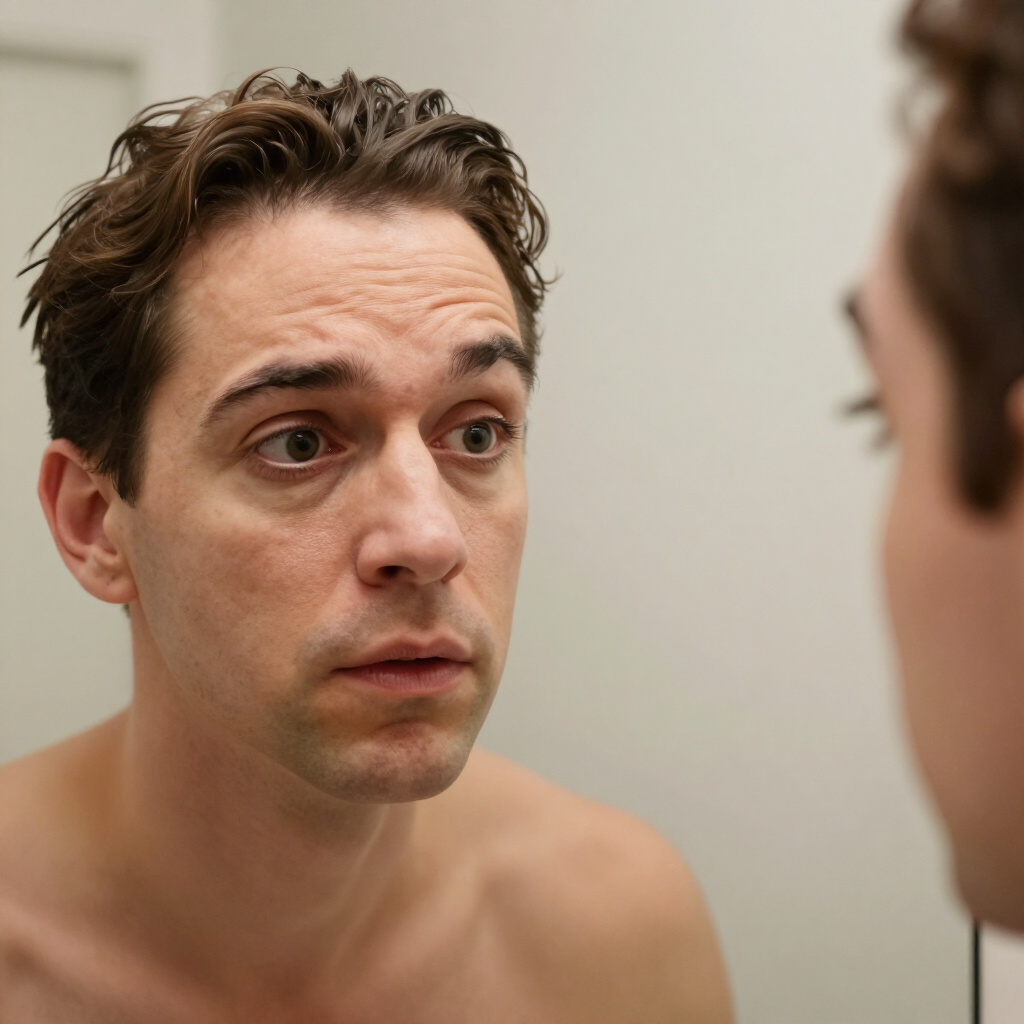
A Spock eyebrow is easiest to see when you move your eyebrows. Try this in front of a mirror placed straight ahead, with good lighting:
- First, look straight ahead with a relaxed expression and note the shape of both brows at rest.
- Then raise your eyebrows as high as you can, as if you were surprised.
- Pay attention to where the movement occurs. Does the middle of your forehead stay smooth and flat, while the outer tip of your brow shoots up, with a few short, slanted lines above it? If so, it’s likely to be a Spock brow.
- Compare the left and right sides. It is often more noticeable on one side.
Take a photo with your face relaxed and while raising your brows. This will help you see later whether it’s getting worse or settling down, and will help the doctor assess it.
Is your brow sitting lower than before, and can you barely raise it? Then it’s something else. Read on to find out why the difference matters.
Why the outer brow shoots up
Your eyebrow sits between two groups of muscles that work against each other. There is only one muscle that raises the eyebrow: the forehead muscle, the musculus frontalis. It is opposed by a group of muscles that pull it down: the frown muscle (musculus corrugator supercilii), the musculus procerus between the eyebrows, the musculus depressor supercilii, and the ring-shaped muscle around the eye (musculus orbicularis oculi). Of that ring-shaped muscle, it is mainly the outer part that pulls on the tail of the eyebrow.
When treating forehead wrinkles, the forehead muscle is temporarily relaxed. Sometimes the product is injected mainly into the middle of the muscle, with little or none reaching the outer fibres near the tail of the brow. This creates an imbalance. The middle is relaxed, while the outer part keeps working and does the lifting. This makes the tail of the brow rise.
So it’s mainly about how the product is distributed across the forehead, rather than the total amount used. A 2012 review describes how a high dose in the muscles that pull the brow down, combined with a high dose in the middle of the forehead, can trigger this effect. A 2025 review identifies another cause: injection points at the sides that are placed too high. The authors say this happens when a practitioner interprets the advice to inject “at least one centimetre above the orbital rim” as “one centimetre above the eyebrow”.
Anatomy also varies from person to person. The extent to which the forehead muscle reaches out to the sides and the strength of its outer fibres are not the same for everyone. This makes some people more prone to this effect than others.
How common is it?
There is no fixed percentage, and figures vary between sources.
For combined forehead and frown-line treatment, the Mephisto sign is listed as “common” in the Vistabel product information. This means it occurs in 1 to 10 out of every 100 people treated. For frown-line treatment alone, it is listed as “uncommon”: in 1 out of 1,000 to 1 out of 100 people. Bocouture lists it the other way around: “common” for frown-line treatment and “uncommon” for combined treatment of the upper face. These figures come from clinical studies, where participants are closely monitored and every change is recorded.
In everyday practice, the reported number is much lower. A 2023 Dutch study collected data on complications from more than 200,000 botulinum toxin treatments at seventeen clinics belonging to one chain. The Mephisto sign was reported sixteen times. The researchers themselves note that not all complications were probably reported. For example, people with a minor asymmetry do not always return.
So it does happen, but not often when treatment is performed carefully.
How we work at Cosmopolitan Clinic
At Cosmopolitan Clinic, the doctor first assesses your forehead at rest and in motion, looking at the left and right sides separately. You frown and raise your eyebrows a few times so the doctor can see which muscles are pulling the hardest. Only then does the doctor determine the injection points.
We almost always assess the forehead and frown area together. The muscles that raise and lower your brows work together. Treating them separately is more likely to upset the balance.
Almost nobody has exactly the same brow position on both sides. The doctor takes this into account to make the difference smaller.
Do you still have a brow with an outer tip that sits too high after treatment? The doctor can make an adjustment if needed at your two-week follow-up.
Spock eyebrow, brow ptosis or drooping eyelid?
Three side effects around the eyebrows are often confused with one another. Each requires a different approach.
- Spock eyebrow. The tail of the eyebrow sits too high because the outer fibres of the forehead muscle remain too active. This is the only side effect for which a small additional injection is the usual solution.
- Drooping brow (brow ptosis). The brow sits lower than before and the upper eyelid feels heavy. This means the forehead muscle is too strong or has been treated too low, leaving the only brow-lifting muscle without enough strength. In the Vistabel product information, this is listed as “common” for combined treatment. Half of those affected notice it within five days. For Bocouture, it is listed as “uncommon”.
- Drooping eyelid (eyelid ptosis). The brow is in its usual position, but the eyelid itself hangs lower over the eye. This happens when the product reaches the muscle that lifts the eyelid. The professional guidelines of the Dutch Society for Dermatology and Venereology warn that injecting above the outer part of the eyebrow carries this risk. According to the Vistabel product information, half of those affected notice it within nine days.
The difference matters. With a Spock eyebrow, the doctor slightly relaxes the muscle that is pulling too hard. With a drooping eyebrow, the lifting muscle is already too weak, and an extra injection in the forehead won’t help. If the product has worked too strongly or in the wrong place, the medical literature recommends waiting, with proper follow-up by your doctor, until it wears off. For a drooping eyelid, the medical literature describes eye drops that can raise the eyelid by one to two millimetres. A doctor can assess whether they are right for you.
Not sure which of the three it is, or does one side look different from the other? Ask a doctor to assess it. Read more about how the muscles that raise and lower the brow work together on our page about the brow lift with a wrinkle relaxer.
The first two weeks: wait and see before judging
Botulinum toxin doesn’t take full effect straight away. Dermatologists’ professional guidelines indicate that the first effects appear after 24 to 48 hours. The product information for Vistabel and Bocouture says the effect begins within a week. The full effect takes a few weeks.
As a result, different areas of your forehead may feel and look uneven during the first few days. What looks like a Spock brow on day three may have evened out by the following week. Conversely, the effect may not become clearly visible until a week or two later.
Do you notice an uneven result in the first few days? A 2023 medical article recommends waiting a few days before adding more product. Our own brow lift treatment page says adjustments can often be made at a two-week follow-up. That is the approach we take.
What you can do during those first two weeks:
- Take the same two photos every few days: one at rest and one with your eyebrows raised.
- Let the clinic that treated you know what you’re seeing. That way, the doctor is aware and can tell you whether you should come in sooner for a check-up.
- Don’t have extra injections elsewhere during that period. Another practitioner won’t know exactly where or how much product was injected.
How a doctor corrects it
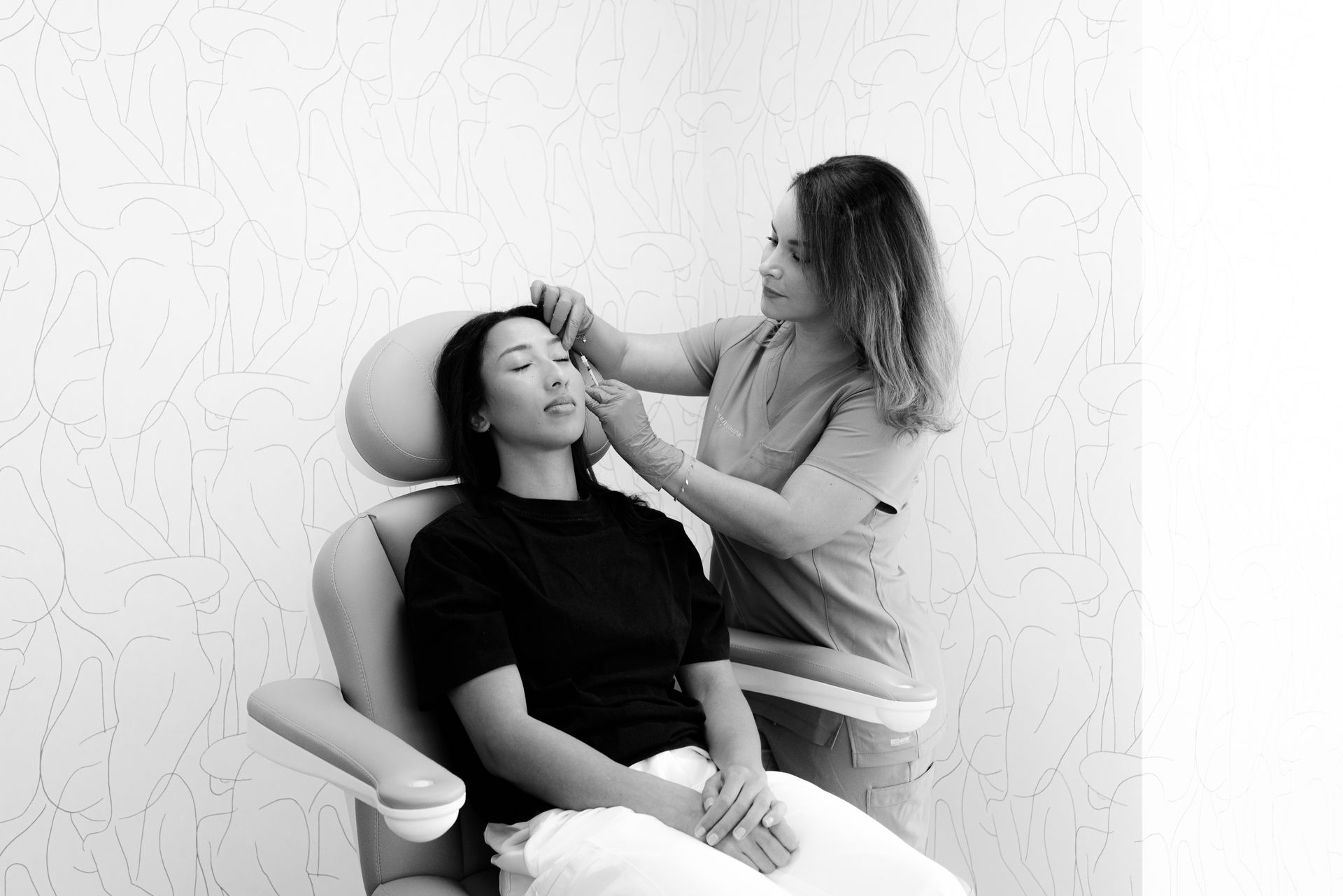
The correction is clearly described in the medical literature: a small dose of botulinum toxin in the outer fibres of the forehead muscle, at the point where the brow rises the most. This slightly relaxes the overactive muscle, bringing the tail of the brow back in line with the rest.
What this looks like in practice:
- Your doctor will ask you to raise your eyebrows a few times and identify the point where the movement is strongest.
- One or two small injections are made at that point, well above the eyebrow. The Vistabel and Bocouture product information recommends staying at least two centimetres above the eyebrow or the orbital rim in this area, because an injection placed too low can cause the eyebrow to droop.
- The amount is small. In the cases described, two units were used per side. There is no standard dose. Your doctor will tailor the dose to how strongly the muscle pulls.
- The correction takes a few minutes.
You’ll need to wait for the correction to take effect, too. A 2026 review recommends reassessing the result after about seven to ten days. In one reported case, the eyebrow was back to normal two to three weeks after the correction.
At your first appointment, ask how the clinic handles follow-up checks and any small touch-ups, and whether there is a charge. That way, you’ll know what to expect.
Does it go away on its own?
Yes. Botulinum toxin is temporary. Once it wears off, the Spock eyebrow will go away too. According to the Vistabel and Bocouture product information, the effect on the forehead lasts about four months. Dermatologists’ professional guidelines give a duration of action of three to five months.
Waiting is always an option. Whether it makes sense depends on how pronounced it is and how much it bothers you. A slight arch that only shows when you raise your eyebrows high doesn’t bother some people, but others find it bothersome. Is there also a clear peak when your face is at rest? Most people would rather have it corrected. They don’t want to live with it for a few months.
A Spock brow does not permanently change your muscles or the position of your brow. Once the product has worn off, your brow will return to how it was before treatment.
What doesn’t help
Massage, heat, saunas or strenuous exercise are said to make Botox wear off faster. There’s no evidence for any of these tips. According to a 2023 review, most aftercare advice is based on experience and has little supporting evidence.
Massage also has a downside. The advice is to avoid touching the injection sites for the first few hours after treatment. This helps keep the product where the doctor injected it. If you massage the area to try to reduce the effect, the product may spread to somewhere you don’t want it.
Filling in the tail of the brow with makeup or plucking it won’t fix the problem either. It may make the arch less noticeable when your face is relaxed, but as soon as you raise your brows, the peak is back.
How to reduce the risk next time
Have you had Spock eyebrows before? That’s valuable information for your next treatment. It tells your doctor how strong the outer fibres of your forehead muscle are and how far they extend.
- Let your doctor know. At your next appointment, mention that you’ve had a Spock eyebrow before, which side it was on, and whether it was corrected. Bring the photos if you have them.
- Have your forehead assessed in motion. A good doctor will ask you to frown and raise your eyebrows beforehand, and assess the left and right sides separately. Only then will they determine the injection points.
- Have your forehead and frown area assessed together. The muscles that raise and lower the brow work together. Read more about why the forehead is rarely treated separately from the frown area on our page about forehead wrinkles.
- Start with a low dose and a follow-up. A small touch-up after two weeks is straightforward. If the result is too strong, you can only wait for the product to wear off. You’ll find the same principle in our blog about the disadvantages of masseter Botox.
- Schedule your treatment well ahead of an important event, such as a wedding, photoshoot or presentation. Allowing a few weeks gives you time for a follow-up and, if needed, a correction.

Who can treat you?
In the Netherlands, botulinum toxin is a prescription-only medicine. Under the BIG Act, injections are a reserved medical procedure. A doctor may perform them, or another practitioner may do so under a doctor’s direction. The Health and Youth Care Inspectorate requires the doctor to be physically present.
In 2025, the Health and Youth Care Inspectorate received 175 reports about Botox and filler treatments. In previous years, the average was 35 per year. Two-thirds involved people performing treatments when they were not authorised to do so.
With a Spock brow, what the practitioner does after treatment matters too. A doctor who assessed your forehead beforehand and knows exactly where and how much was injected can make a targeted adjustment at a follow-up. If your practitioner doesn’t have that information or doesn’t offer follow-up care, you’re left on your own afterwards.
Always ask who will be treating you, whether they are registered with the BIG register, and whether a follow-up appointment is included. You can look up a BIG registration yourself in the public BIG register.
Sources
| Subject | Sources |
|---|---|
| Mephisto sign (Spock brow) as a side effect: “common” when treating the forehead and frown area, “uncommon” for frown lines alone; brow ptosis and eyelid ptosis “common” with combined treatment, median onset at 5 and 9 days; injection points at least 2 cm above the eyebrow; duration of effect about 4 months. | Summary of Product Characteristics Vistabel, AbbVie (revised September 2026). |
| Mephisto sign “common” for frown lines and “uncommon” for the upper face; brow ptosis “uncommon”; avoid injections close to the orbital rim to prevent brow ptosis; duration of effect up to 4 months. | Summary of Product Characteristics Bocouture, Merz (revised December 2025). |
| The Mephisto effect as a side effect of botulinum toxin A. | Dutch Pharmacotherapeutic Compass, botulinum toxin A (National Health Care Institute, consulted 2 October 2026). |
| Onset of action 24 to 48 hours after treatment, duration of action 3 to 5 months, upward positioning of the lateral eyebrow as a complication, risk of eyelid ptosis with injection above the lateral eyebrow. | NVDV, Guideline for botulinum toxin therapy for cosmetic indications (professional guideline, 2025). |
| The forehead muscle is the only brow elevator; depressors include the procerus, corrugator, depressor supercilii and orbicularis oculi; Spock brow caused by relaxation of the middle and activity of the sides of the forehead muscle; correction with a small additional dose in the active lateral area. | Borba A, Matayoshi S, Rodrigues M. Avoiding complications on the upper face treatment with botulinum toxin: a practical guide. Aesthetic Plastic Surgery 2022;46(1):385-394 (published, review article). |
| The outer part of the ring-shaped muscle around the eye pulls the tail of the brow down. | Knize DM. An anatomically based study of the mechanism of eyebrow ptosis. Plastic and Reconstructive Surgery 1996;97(7):1321-1333 (published, anatomical study). |
Frequently asked questions
What are Spock eyebrows after Botox?
It is a temporary side effect in which the outer tip of the eyebrow pulls too far upward after forehead treatment. This creates a pointed arch and a surprised or questioning look. The product information calls this the Mephisto sign.
How long do Spock eyebrows last?
Without correction, it goes away as the product wears off. The product information says the effect on the forehead lasts about four months, while dermatologists’ professional guidelines say three to five months. With a small correction, it usually settles within a few weeks.
Can Spock brows be corrected?
Yes. A doctor injects a small amount of botulinum toxin into the outer fibres of the forehead muscle, at the point where the eyebrow pulls up the most. The effect can be assessed after about seven to ten days.
When can you have it corrected?
If possible, wait until about two weeks after treatment. In the first few days, the product doesn’t work equally strongly everywhere, and any unevenness may even out on its own. Do contact your clinic straight away if you notice anything, so they’re aware.
Is a Spock brow the same as a drooping brow?
No, it’s almost the opposite. A Spock brow is caused by the tail of the eyebrow sitting too high; a drooping brow sits too low. The treatment is different too: a small additional injection can help with a Spock brow, but not with a drooping brow.
Personal advice
After treatment, do you notice an eyebrow with an outer tip that sits too high, or are you unsure whether it’s a Spock eyebrow, a drooping eyebrow or a drooping eyelid? Discuss it with the doctor who treated you. Have you had a Spock eyebrow before, at our clinic or another one, and would you like to have your forehead treated again? Mention it during your consultation. Our cosmetic doctors assess your forehead at rest and in motion, looking at the left and right sides separately. They tailor the injection placement accordingly. One of them is Drs. Leanne Wong, cosmetic doctor KNMG. Read more about our wrinkle-relaxing injections or book an appointment at Cosmopolitan Clinic in Amsterdam.